
Bite problems explained
Bite problems explained
In orthodontics, your "bite" is how the upper and lower teeth meet when you close your mouth. When they meet unevenly, or do not meet at all, that is a malocclusion. The three most common kinds are overbite, underbite and crossbite. Some are mild and only need monitoring. Others affect chewing, speech, jaw comfort and the long-term health of your teeth, and those are the ones an orthodontist treats.
As a specialist orthodontist in Abu Dhabi with 20 years of experience and more than 1000 completed cases, Dr. Saba Al-Hadithi assesses bite problems the same way every time: diagnosis first, then a plan that recommends only what the bite actually needs.
At a glance
| Aspect | Overbite | Underbite | Crossbite |
|---|---|---|---|
| What happens | Upper front teeth overlap the lower front teeth too far down (a deep bite) | Lower front teeth sit in front of the upper front teeth | Some upper teeth bite inside the lower teeth instead of outside |
| Direction of the problem | Vertical overlap | Front to back | Side to side |
| Common cause | Jaw or tooth size, thumb sucking, genetics | Lower jaw growth, usually hereditary | Uneven jaw growth, crowding, early habits |
| Often treated with | Braces or aligners, bite correction | Braces or aligners, jaw surgery if severe | Expander, then braces or aligners |
| Self-corrects on its own? | No | No | No |
A crossbite involves side-to-side alignment, while overbites and underbites are front-to-back. Because of that, it is possible to have more than one at the same time.
An overbite is a vertical overlap: the upper front teeth come down too far over the lower ones. A small overlap is normal and healthy. A pronounced one can make the lower front teeth bite into the gum behind the upper teeth, wear the enamel down unevenly and strain the jaw joint. It is sometimes confused with overjet, where the upper teeth stick out horizontally rather than overlapping vertically.
An underbite is the reverse: the lower front teeth and jaw sit ahead of the upper teeth. It is usually hereditary, often because the lower jaw grows larger or the upper jaw grows smaller than expected. Underbites tend to be more visible and can change the facial profile, so they are frequently picked up earlier than other bites.
A crossbite is a side-to-side problem, where one or more upper teeth bite inside the lower teeth instead of outside them. It can affect the front teeth (anterior crossbite), the back teeth (posterior crossbite), one side, or a single tooth. Left alone in a growing child, a crossbite can pull jaw development to one side and cause noticeable facial asymmetry over time.
Harder chewing
When teeth do not meet evenly, food is harder to break down and certain foods become awkward to bite.
Speech difficulty
Open bites and severe misalignment change where the tongue sits, which can blur certain sounds.
Jaw pain and clicking
An uneven bite makes the jaw muscles and joint work harder, which can lead to discomfort or headaches.
Uneven tooth wear
Pressure lands on a few teeth instead of being shared, so enamel wears faster and teeth can chip.
Gum recession
Crowded or crossed teeth are harder to clean and can take more force, raising the risk of receding gums.
Facial appearance
A strong overbite or underbite can change the balance of the lips, chin and lower face, not just the smile.
The honest answer
No. A mild overlap with no symptoms may simply be monitored. What a mild problem will not do is fix itself. Bite problems do not self-correct, and in adults the jaw has stopped growing, so they tend to stay or slowly worsen. In young children, a baby-teeth bite is sometimes watched as the adult teeth come through, but that is a clinical decision, not a reason to wait and hope.
If any of these sound familiar, a specialist assessment is the reliable way to know whether the bite needs treatment or just monitoring.
Diagnosis first
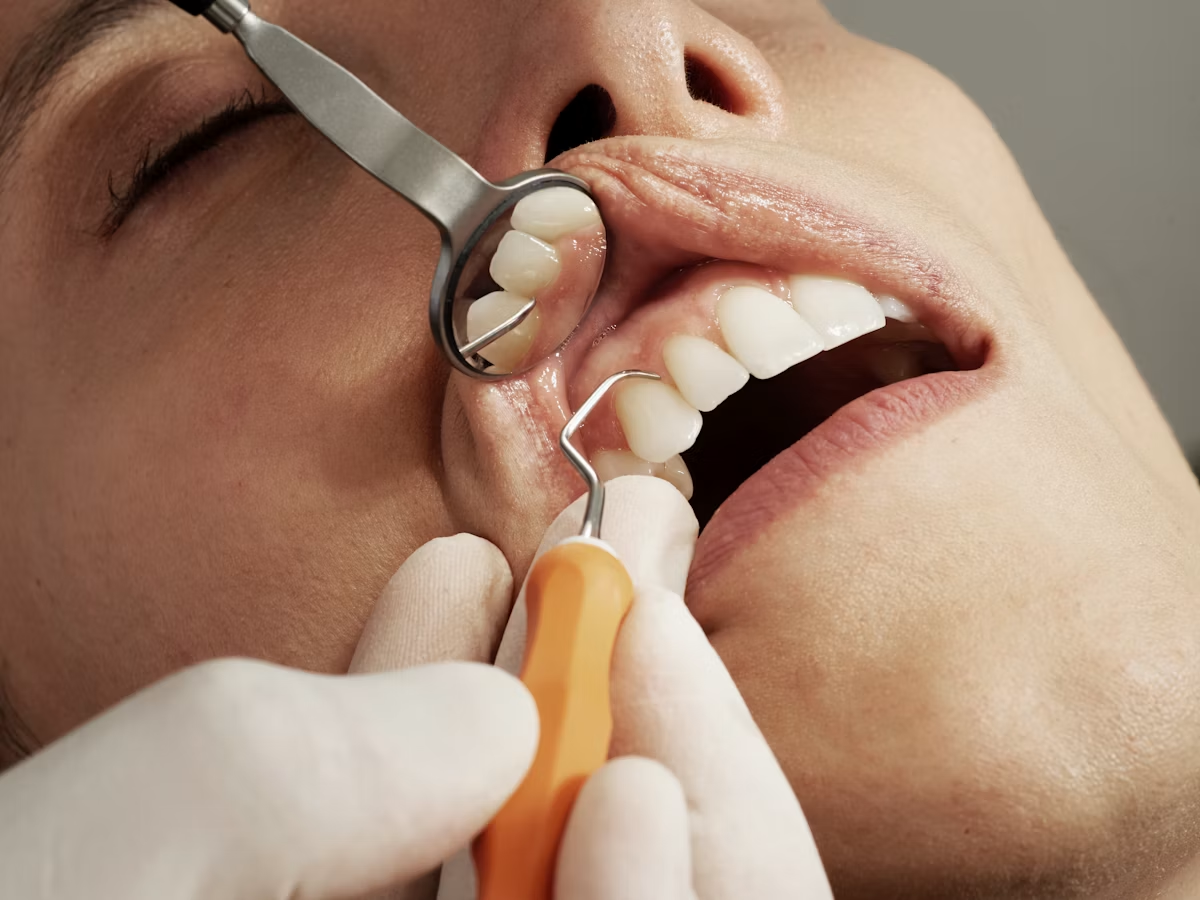
Clinical examination
A hands-on look at how the teeth meet, jaw movement and any wear or gum changes.
Digital scan
A quick 3D scan replaces messy moulds and shows the bite from every angle.
X-rays and records
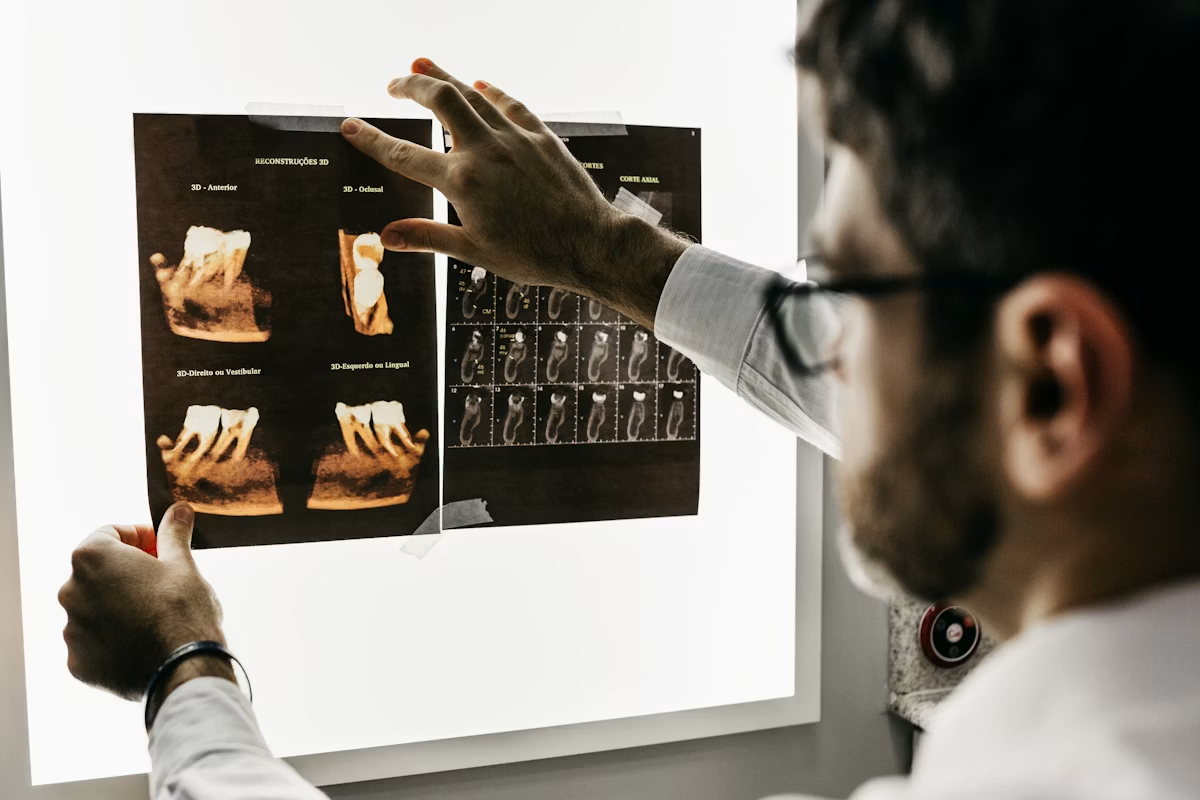
Imaging shows the roots and jaw position, which separates a tooth issue from a jaw issue.
Treatment plan
A phased plan with realistic timelines, and a clear answer on what does and does not need doing.
Most bite problems are corrected without surgery. Fixed braces handle the widest range of cases, including more complex overbites and underbites, because they can move teeth precisely in every direction. Clear aligners suit mild to moderate cases and discreet adult treatment, with the trade-off that very severe or skeletal bites can sit beyond what aligners alone manage.
Around age 7 the first adult teeth are in, so a bite can be assessed early. That timing matters most for crossbites and underbites, where guiding the jaw while it grows can prevent more complex work later, which is exactly what an early assessment for children is for. Plenty of bites are still corrected well into adulthood, and adult orthodontics uses the same tools with a focus on discreet options.
Help
No. Bite problems do not correct on their own, and once jaw growth has finished they tend to stay the same or slowly worsen. A baby-teeth bite is sometimes monitored as adult teeth arrive, but that is a planned clinical decision rather than waiting and hoping it improves.
Not always for active treatment, but it is worth having it checked. A mild bite with no symptoms may simply be monitored. The value of seeing a specialist is getting an honest answer on which it is, so you treat what needs treating and leave alone what does not. The initial consultation is free, so an assessment costs you nothing but time.
It depends on the type and severity of the bite and the method used. Simpler alignment can take several months, while more complex overbites, underbites and crossbites usually run over one to two years. After a clinical exam, scan and x-rays we can give you a realistic timeline for your specific case rather than a generic estimate.
Adults can absolutely be treated. The jaw no longer grows, so some severe skeletal cases may need a combined surgical approach, but the great majority of adult overbites, underbites and crossbites are corrected with braces or clear aligners.
An overbite is a vertical overlap, where the upper front teeth come down too far over the lower ones. An overjet is horizontal, where the upper front teeth stick out forward. They can occur together, and the distinction matters because they are corrected in slightly different ways.
Yes, with retainers. Teeth naturally drift back toward their old position once braces or aligners come off, so a retainer holds the corrected bite in place. Retention and follow-up are part of finishing the job properly, not an optional extra.
A short consultation is the most reliable way. A specialist orthodontist examines how your teeth meet, takes a digital scan and x-rays if needed, and tells you which bite issue you have, how significant it is and whether treatment is recommended.
A specialist assessment in Abu Dhabi will tell you what your bite needs, and what it does not. The first consultation is free.