
Clear Aligners Compared
The short answer
Angel Aligners and Invisalign do the same job in the same way. Both are clear, removable trays that slip over your teeth and shift them a little at a time, swapping one tray for the next every week or two until your teeth reach the planned position. Neither uses brackets or wires, so you take them out to eat, brush and floss.
The differences sit in the material, the technology behind the plan and the brand, not in the basic idea. As a specialist orthodontist in Abu Dhabi with 20 years of experience, Dr. Saba Al-Hadithi treats the choice between the two as a clinical decision: the right system is the one that fits your bite, your case and how you actually live, not the one with the bigger name.
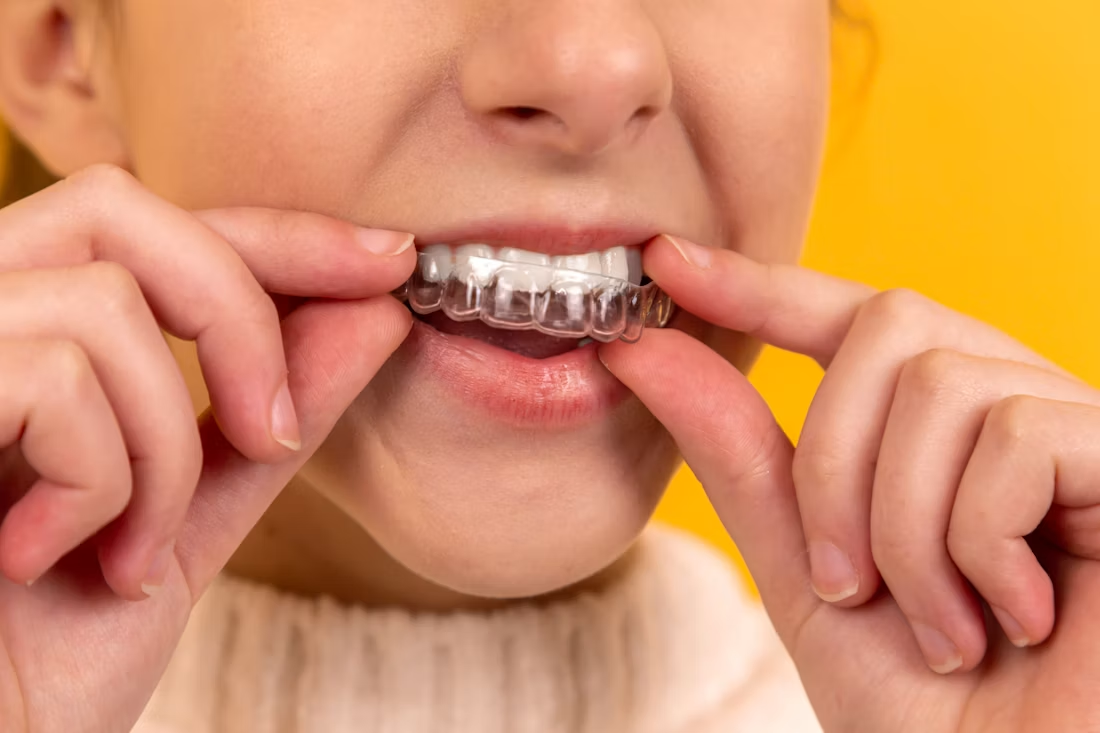
Angel Aligners are clear, removable, custom made trays built from a digital plan of your teeth. The system is newer to many markets but well established internationally, and it is known for thinner trays, trimmed and polished edges, and an anti-staining finish that helps the trays stay clear for longer. For harder cases, the Angel Aligner Pro approach pairs a softer, more flexible tray with a firmer one at each stage to balance comfort and control. It is suitable for mild through to complex orthodontic issues.
Invisalign is the system that introduced aligner based orthodontics and it remains one of the most widely used in the world. Its trays are made from SmartTrack, a medical grade thermoplastic designed to apply gentle, steady force and fit closely. The brand is backed by a large global provider network and a long body of clinical research, which is part of why many patients recognise the name. Like Angel, it covers mild, moderate and complex cases when planned by a specialist.
This clear aligners comparison lines up the points patients ask about most. Treat it as a starting map, not a verdict: your scan and diagnosis decide which column is right for you.
| What patients ask about | Angel Aligners | Invisalign |
|---|---|---|
| Background | Newer system, well established in Asia, now used worldwide | Pioneer of clear aligners, large global track record |
| Signature material | Multiple materials, including the two stage Angel Aligner Pro | SmartTrack thermoplastic |
| Edge comfort | Trimmed and polished edges, often thinner trays | Smooth SmartTrack fit |
| Anti-staining finish | ✓ | Standard clear material |
| Typical tray change | Often every 7 days, or as advised | Commonly every 10 to 14 days, or as advised |
| Case range | Mild to complex | Mild to complex |
| Removable and near-invisible | ✓ | ✓ |
| Orthodontist supervised plan | ✓ | ✓ |
Thickness and flexibility
Thinner, more flexible trays tend to feel less bulky, while firmer material can give the orthodontist more control over difficult movements.
Edge comfort and speech
Polished, well trimmed edges sit kinder against the gums. Most people notice a slight lisp for a few days, which fades as the tongue adjusts.
Appearance up close
Both are hard to spot in conversation. Small tooth coloured attachments are sometimes added to grip the teeth, and anti-staining trays help the look stay discreet.
The adjustment period
Each new tray brings a day or two of mild pressure as the teeth start to move. That feeling is normal and a sign the trays are working.
That discreet look is one reason aligners suit working professionals, and it sits at the heart of our adult orthodontic treatment in Abu Dhabi, where most patients want correction nobody else has to notice.
Digital scanning
Both systems start with a digital scan instead of messy impressions, giving a precise 3D model of your teeth in minutes.
Planning software
Each tooth movement is mapped stage by stage. The software predicts the path, but it is the orthodontist who shapes and checks the plan.
Monitoring and follow up
Progress is tracked at review visits, and some cases suit remote check ins between appointments to keep movement on track.
Suitability
Modern aligners handle a wide range of cases. The deciding factor is rarely the brand: it is whether the movement is within reach of trays and how carefully the plan is built.
Whichever system you choose, the result needs protecting once trays come off, which is why retainers after treatment are part of every plan, not an afterthought.
Cost in the UAE
In the UAE, clear aligner treatment is a multi-thousand-dirham investment rather than a fixed sticker price. Genuine Invisalign in Abu Dhabi and Dubai is often quoted from around AED 12,000 upward for full treatment, while other clear aligner systems can sit lower. Two quotes are rarely comparing the same thing, so it is worth asking what each one actually includes.
A very low price often signals a generic tray marketed as something it is not, or a base figure that leaves out the parts you will still need to pay for.
The point that matters most
Angel Aligners and Invisalign are both excellent tools. A tool only works as well as the hands planning it. The same set of trays can produce a clean, stable result or a disappointing one depending on the diagnosis, the staging of each movement and the judgement behind every adjustment.
That is the case for choosing a specialist orthodontist over a general dentist who offers aligners as one service among many. A specialist plans the bite, not just the front teeth, and our Invisalign and Angel Aligner treatment is built around an honest assessment of whether trays are even the right answer for you.
All aligners work the same
They share an idea, not an outcome. Material, change interval and planning differ, and so does the clinician guiding them. The plan is what moves your teeth, not the box.
They are completely invisible
Near-invisible is fair, completely invisible is not. The trays are very discreet, but attachments and reflections can be seen up close, especially if trays are stained.
Aligners are always faster than braces
Sometimes, not always. For some movements, fixed braces remain more efficient. If you want the full picture, see how clear aligners compare with braces.
Angel Aligners may suit you if
Invisalign may suit you if
The honest answer for most people: book a scan, get a diagnosis, then let the case point to the system. That is a much better guide than a brand name you read first.
The core idea is identical: clear, removable trays that move teeth gradually. The differences are in the detail. Angel Aligners are often thinner, with polished edges, an anti-staining finish and a shorter tray change interval, plus a two stage Pro option for harder cases. Invisalign uses its SmartTrack material and is backed by a large provider network and a long research history. For most patients the gap between them is smaller than the gap between a good plan and a rushed one.
Both systems can treat moderate to complex cases, including deep bite, crossbite, rotated teeth and severe crowding. There is no single winner. Complex movements depend far more on the diagnosis and how each stage is planned and monitored than on which brand is printed on the tray. A specialist will tell you honestly if a case sits at the edge of what aligners can do.
They are very discreet but not truly invisible. In normal conversation most people will not notice them. Up close, small tooth coloured attachments and the edges of the trays can be visible, and trays that pick up stains become easier to see, which is why anti-staining materials help. Expect near-invisible rather than invisible.
Not as a rule. For certain cases aligners can be efficient, but for some movements fixed braces are still quicker or more predictable. Speed depends on the specific case and on how consistently you wear the trays, not on a blanket promise about aligners being faster.
Around 20 to 22 hours a day, taking them out only to eat, drink anything other than water, brush and floss. Wear time is the single biggest factor in staying on schedule. Skipping hours is the most common reason treatment runs longer than planned.
It varies by case. In the UAE, genuine Invisalign is often quoted from around AED 12,000 upward for full treatment, while other clear aligner systems can sit lower. The final figure depends on the number of aligners, case complexity, the clinic and what the quote includes, such as scans, refinements and retainers. Many clinics offer interest free monthly instalments, and our initial consultation is free, so you can get a clear figure before deciding.
No. The brand is the tool, the orthodontist is the result. The same trays can finish beautifully or fall short depending on the diagnosis, the planning and the follow up. Choosing a specialist who plans the whole bite, rather than a general dentist offering aligners on the side, makes more difference than choosing between Angel and Invisalign.
The clearest next step is a scan and a diagnosis. Our initial consultation in Abu Dhabi is free, and you can book it over WhatsApp.