
Early Orthodontic Treatment – Midface Retrusion & Posterior Crossbite Correction
A 9-year-old boy was brought to the clinic by his parents, who were concerned about his bite and jaw position. They had noticed that his upper jaw looked narrow and that his lower jaw seemed more prominent, and they worried the problem would become more noticeable as he grew. Examination confirmed a developing Class III malocclusion caused mainly by an underdeveloped upper jaw (midface retrusion), together with a narrow upper arch and a posterior crossbite. Because he was still growing, we were able to treat the cause – the upper jaw itself – with a rapid palatal expander followed by a facemask.
Case Summary
| Patient profile | 9-year-old boy in the mixed dentition stage (baby and permanent teeth present), still actively growing |
| Main concerns | Narrow upper jaw, prominent-looking lower jaw, worry that the bite would worsen with growth |
| Diagnosis | Developing skeletal Class III malocclusion due to maxillary deficiency (midface retrusion), constricted upper arch and posterior crossbite |
| Appliance used | Hyrax rapid palatal expander, followed by a facemask (reverse-pull headgear) |
| Key challenge | Correcting a skeletal jaw discrepancy within the limited growth window when the upper jaw still responds to orthopedic forces |
| Outcome | Upper jaw expanded, posterior crossbite corrected, a more favourable jaw relationship and improved facial balance and lip support |
| Next step | Growth monitoring through the eruption of the remaining permanent teeth, with a possible Phase 2 in adolescence |
Why Early Treatment Matters
One of the biggest misconceptions in orthodontics is that all treatment should wait until every permanent tooth has erupted. For children with a developing Class III skeletal pattern, timing is critical. The upper jaw responds best to orthopedic correction during the mixed dentition stage, while growth is still active. Delaying treatment can reduce our ability to influence jaw development and increases the likelihood of more complex treatment later in life.
The Problem
- Midface retrusion — the upper jaw had not grown forward enough relative to the lower jaw, making the lower jaw appear more prominent.
- Developing Class III jaw relationship — an early skeletal discrepancy between the upper and lower jaws that tends to become more pronounced with growth if left untreated.
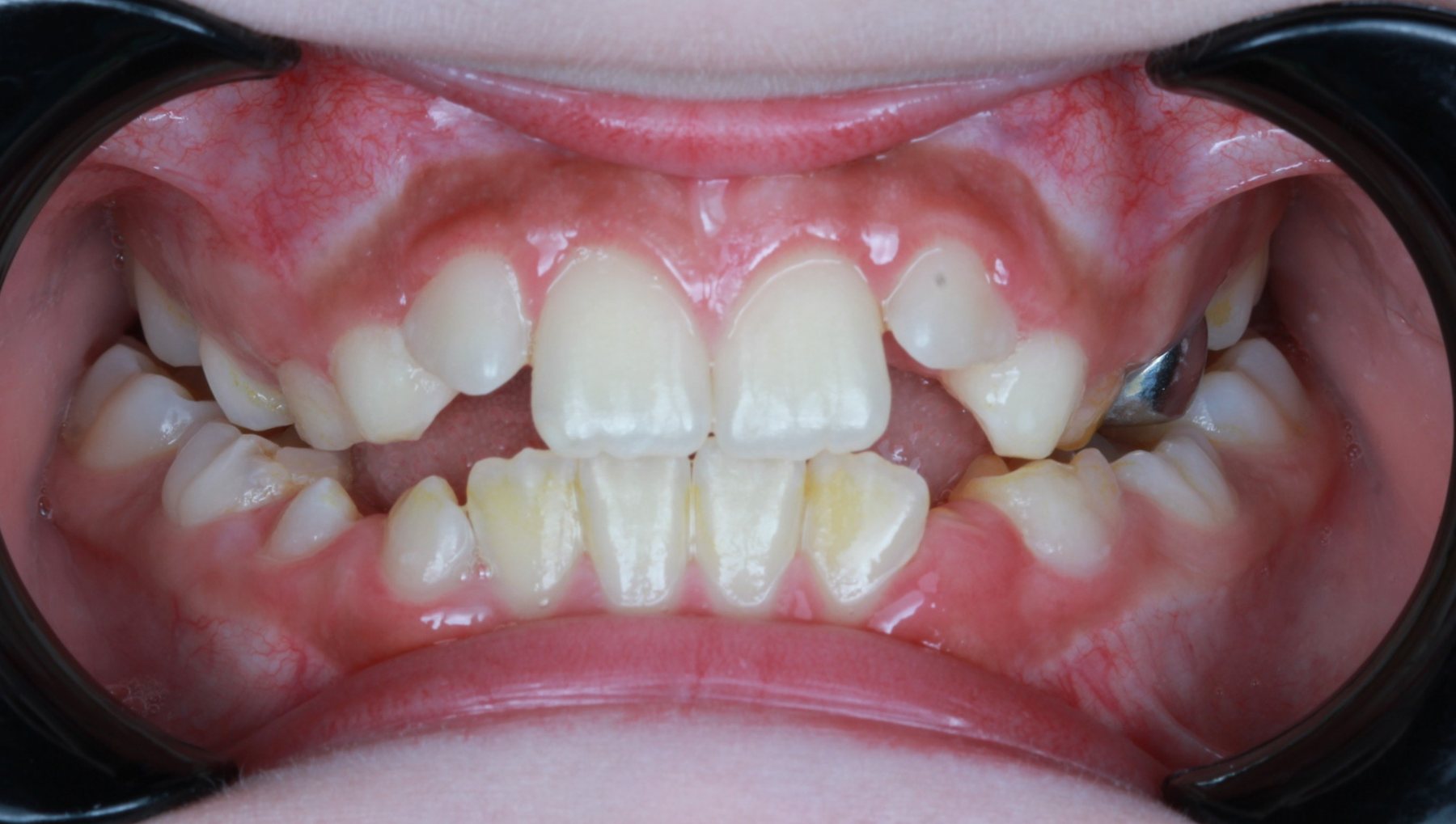
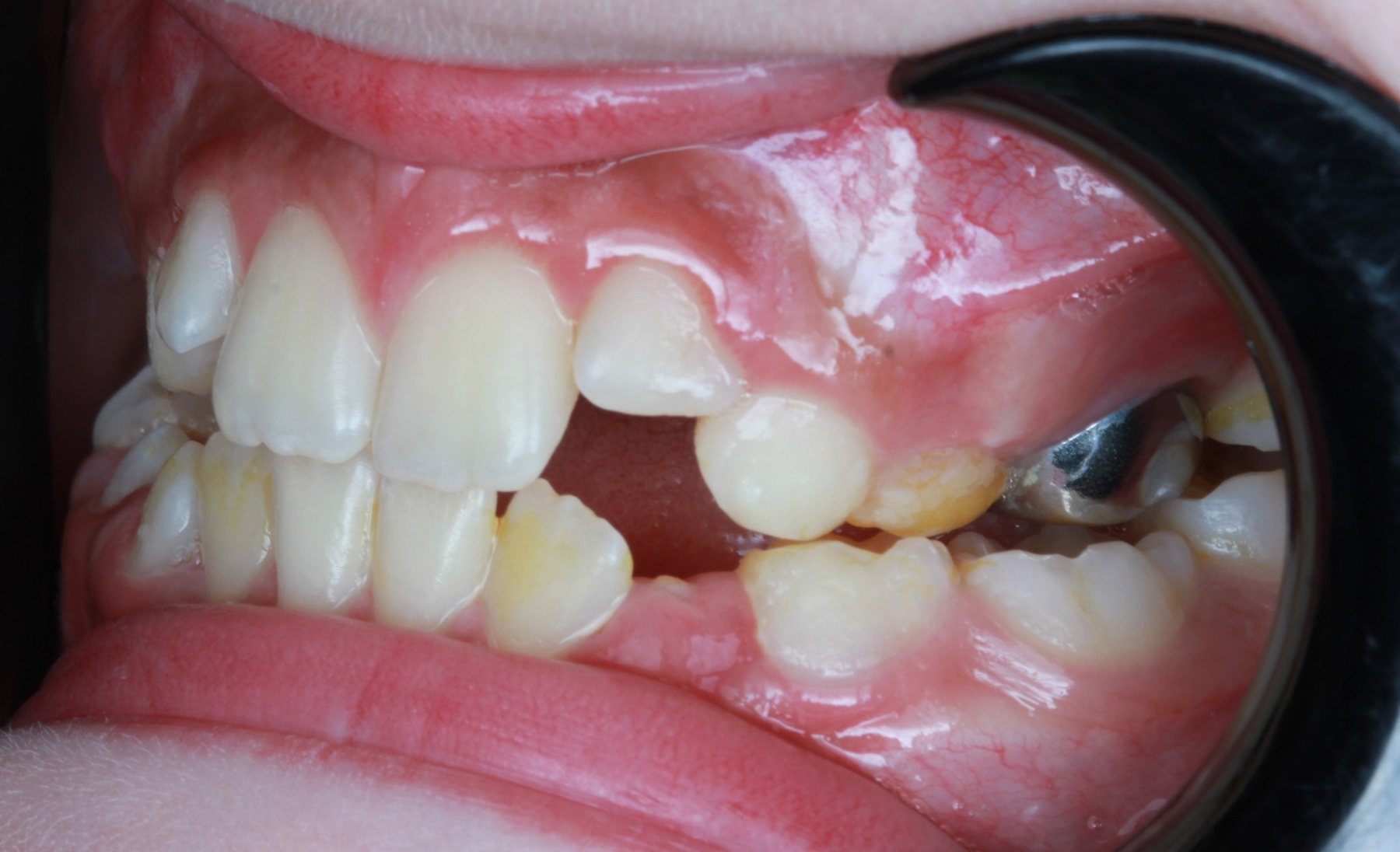
- Posterior crossbite — because the upper jaw was too narrow, the upper back teeth were biting inside the lower back teeth.
- Constricted maxillary arch — a narrow upper arch with limited space for the incoming permanent teeth.
What We Found
- Midface retrusion (underdeveloped upper jaw) and a developing Class III jaw relationship.
- Posterior crossbite caused by a narrow, constricted upper jaw.
- Mixed dentition stage with both baby and permanent teeth present.
- Early signs of a skeletal discrepancy between the upper and lower jaws.
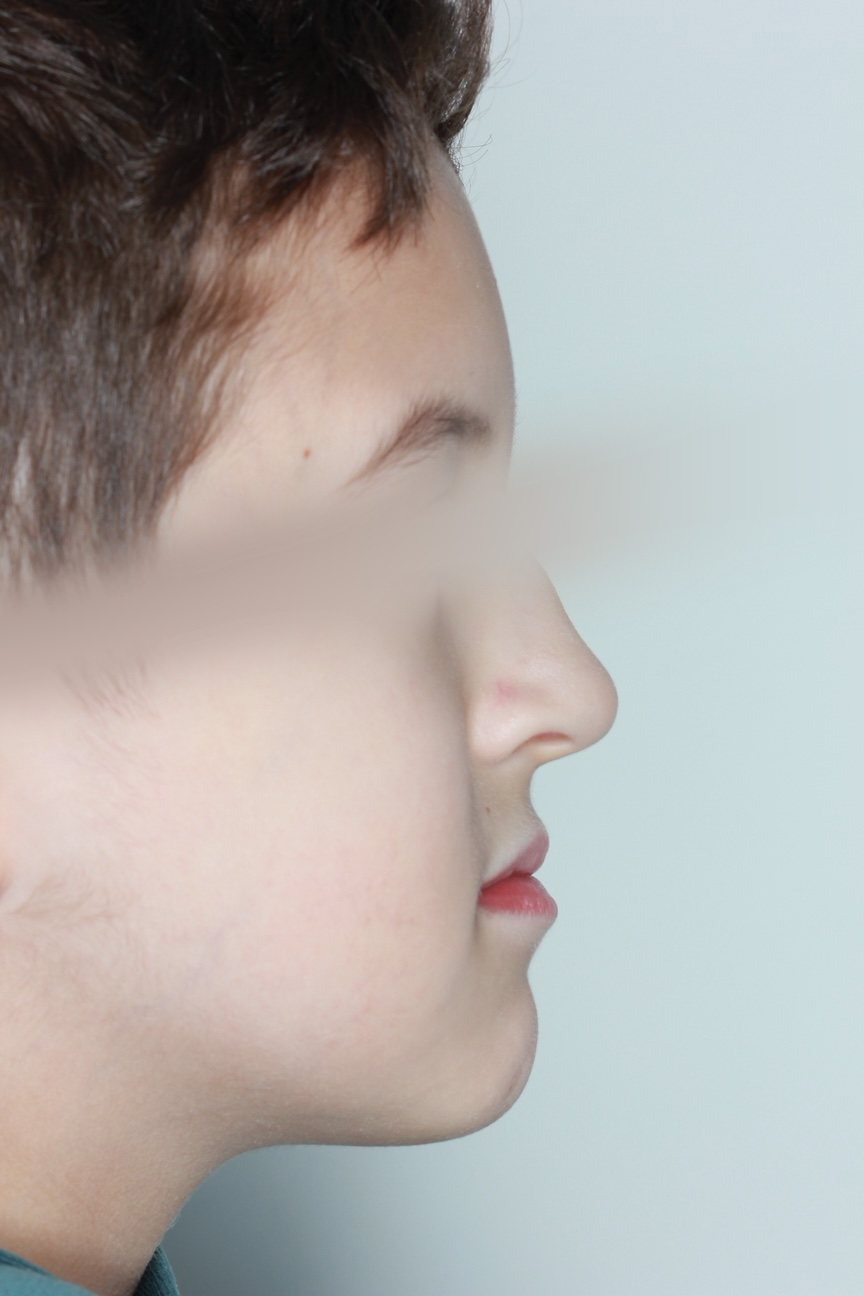
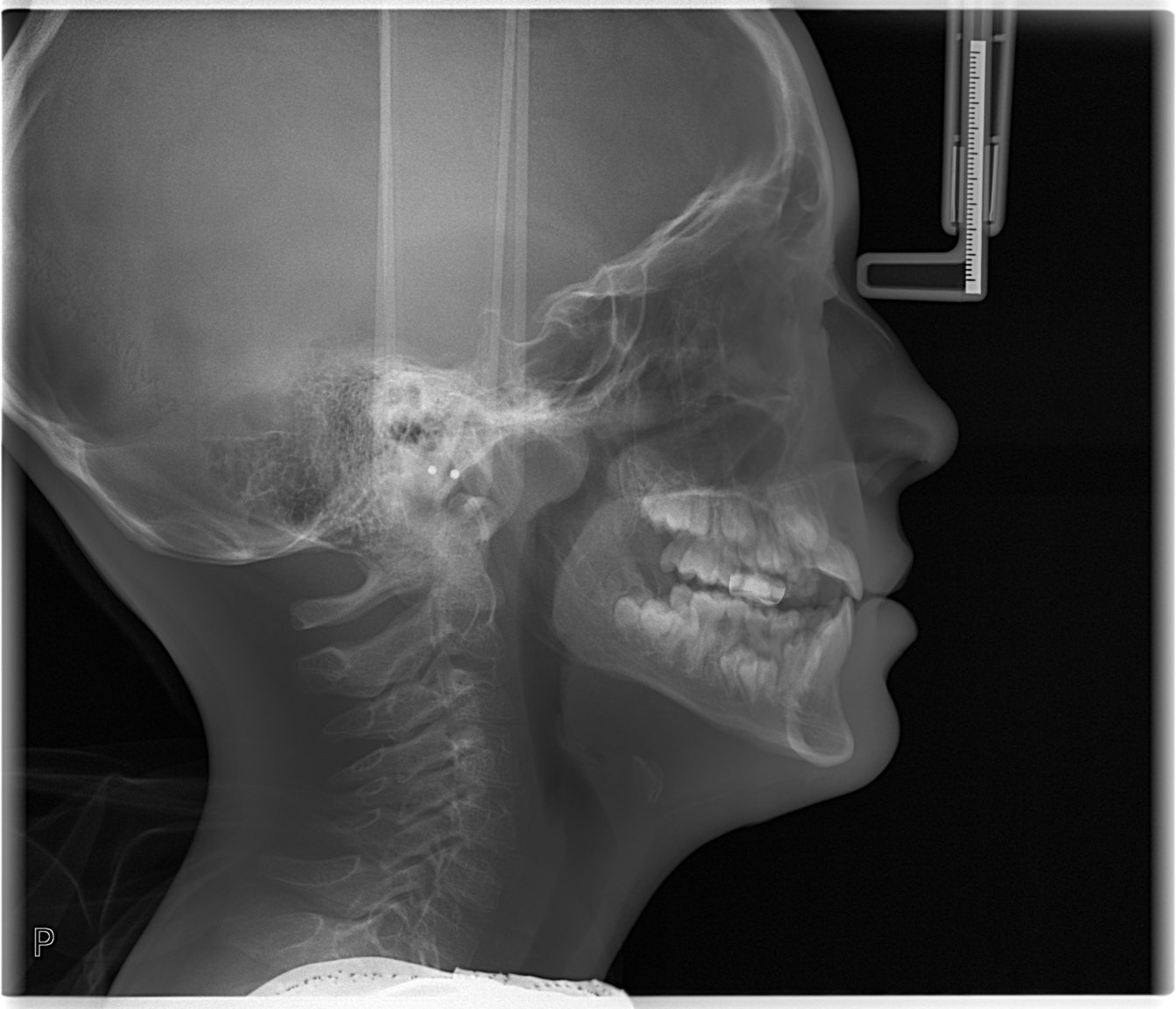
- Reduced support of the upper lip and midface on the facial assessment – a common finding in patients with maxillary deficiency.
Before
A narrow upper jaw, a posterior crossbite and reduced midface support, with the lower jaw appearing prominent in profile.
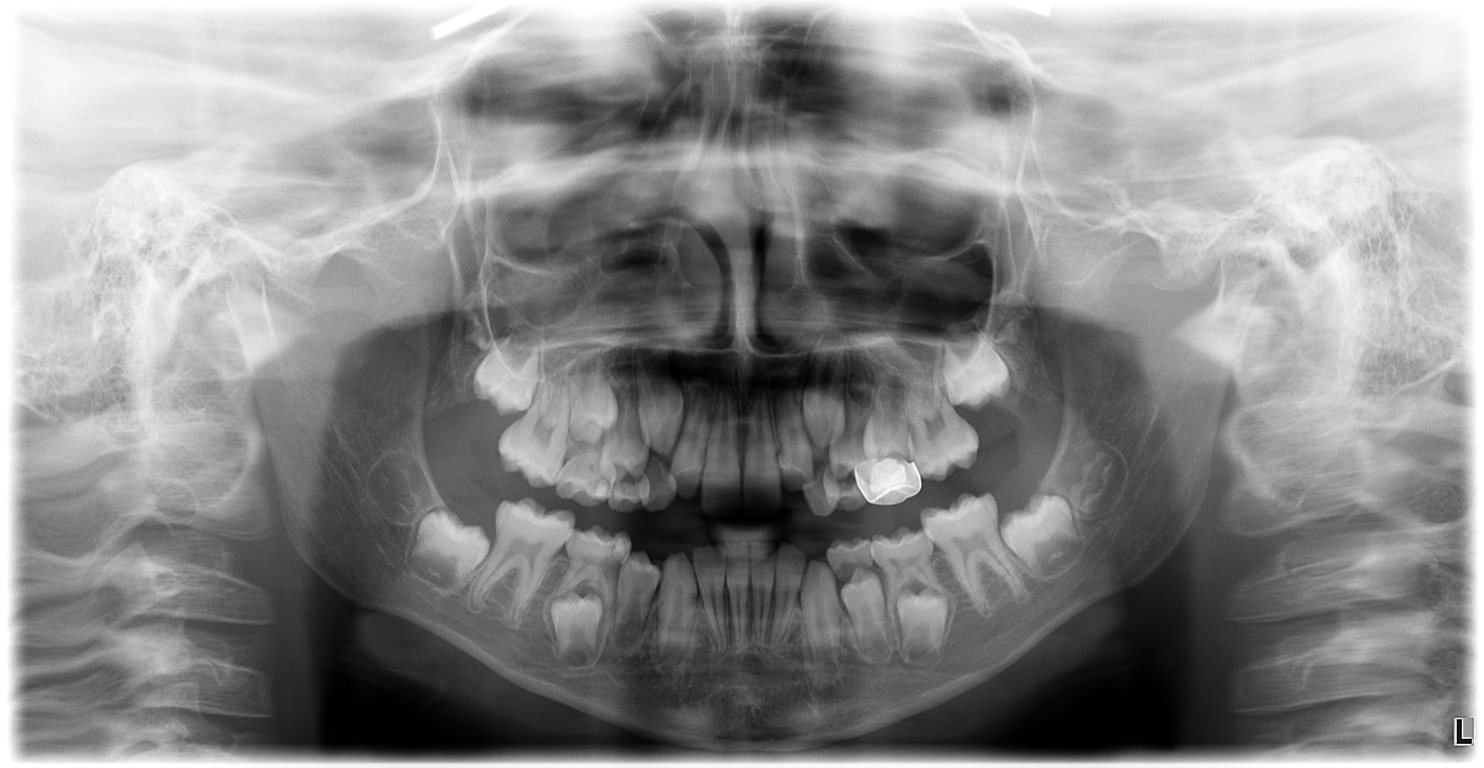
Initial X-rays
Treatment Objectives
- Expand the upper jaw
- Correct the posterior crossbite
- Improve the relationship between the upper and lower jaws
- Encourage forward development of the maxilla
- Create a more favourable environment for future tooth eruption
- Reduce the severity of the developing skeletal discrepancy
The Plan
- Step 1 – Expansion: a Hyrax rapid palatal expander to widen the upper jaw and correct the transverse deficiency.
- Step 2 – Forward growth: once expansion was achieved, a facemask to apply gentle orthopedic forces that encourage the upper jaw to grow forward.
What We Did
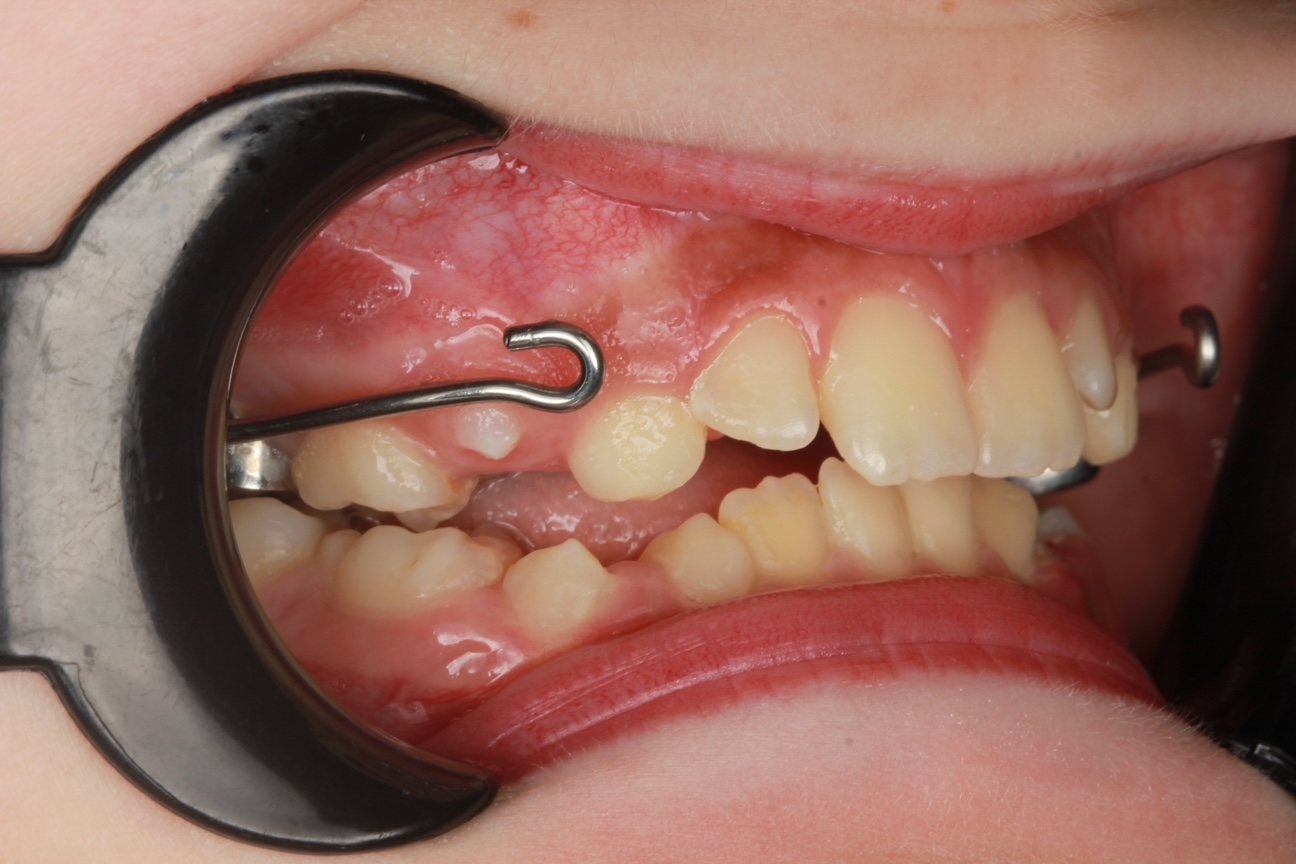
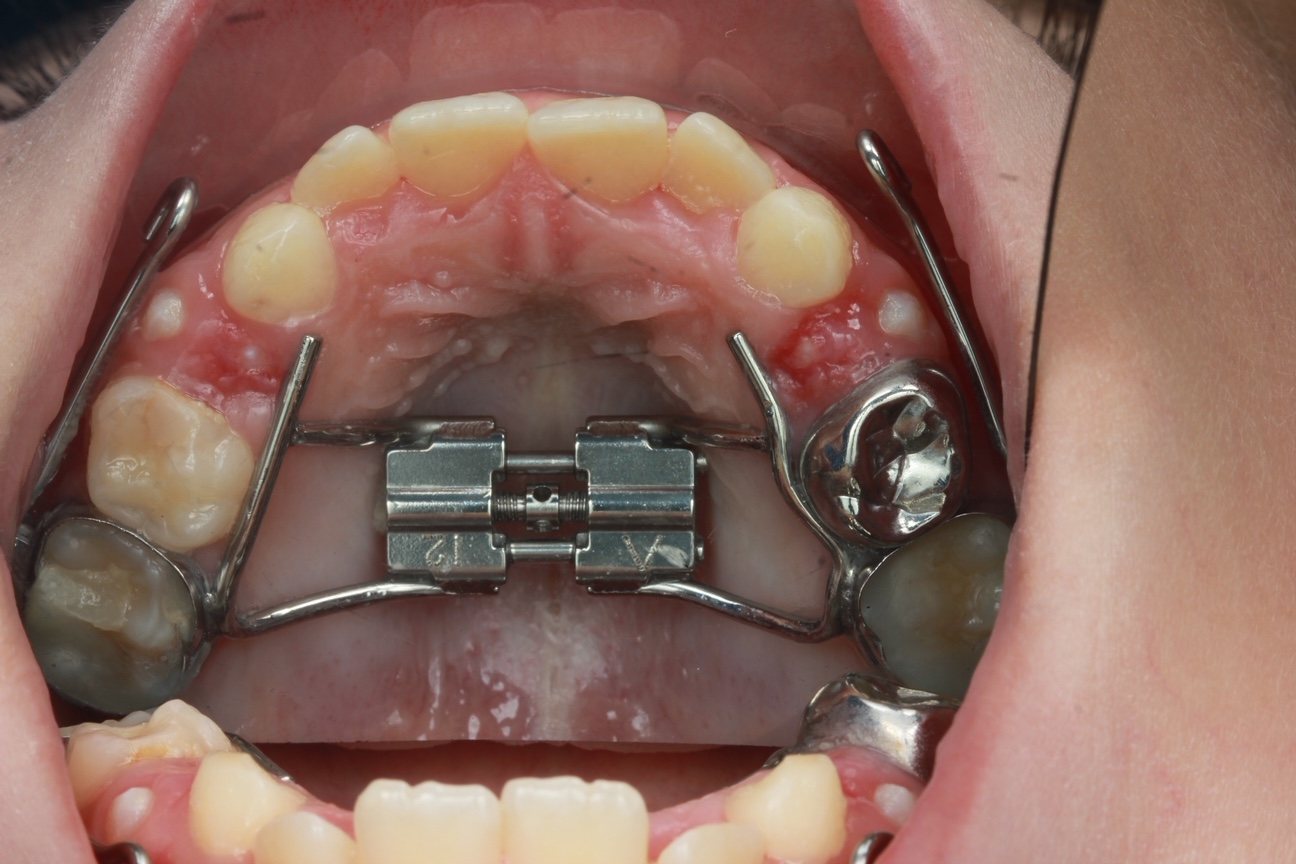
- Rapid palatal expansion: a Hyrax expander was fitted to the upper jaw and activated to widen the narrow maxilla and eliminate the posterior crossbite.
- Facemask therapy: after expansion, the facemask was attached to hooks on the expander to deliver gentle forward traction to the upper jaw.
- Patient cooperation: success with facemask therapy depends heavily on timing and patient cooperation – and this young patient showed excellent compliance throughout treatment.
The combination of rapid palatal expansion and facemask therapy remains one of the most effective evidence-based approaches for growing children with maxillary retrusion and a developing Class III malocclusion.
After Phase 1
The upper jaw expanded, the posterior crossbite corrected and a more favourable relationship between the upper and lower jaws.
The Result
- The upper jaw was successfully expanded.
- The posterior crossbite was corrected.
- The upper and lower jaws achieved a more favourable relationship.
- Facial balance, profile and upper lip support improved.
- A healthier foundation was created for the eruption of the remaining permanent teeth.
What Changed Most
Treatment was completed during a key growth period, when orthopedic correction is most effective. Instead of waiting for the jaw discrepancy to grow with him, we corrected the underlying problem at the ideal age and guided his growth in a more favourable direction – improving both his bite and his facial balance.
What Happens Next?
This was Phase 1 orthodontic treatment. The goal was not to achieve the final perfect smile, but to correct the underlying jaw discrepancy at the right time. As with many growing children, we will continue to monitor his growth as the remaining permanent teeth erupt. A second phase of treatment may be needed during adolescence to refine tooth alignment and finalise the bite once all permanent teeth are in place.
Caring for an Expander & Facemask at Home
- Brush carefully after every meal, around the expander bands and along the gumline – food collects easily around the appliance.
- Rinse with water after eating and use a small interdental brush or water flosser to clean under the expander.
- Wear the facemask for the hours prescribed each day – consistent wear is what makes facemask therapy work.
- Avoid hard and sticky foods (nuts, ice, toffee, chewing gum) that can bend or loosen the expander.
- Some pressure or a small gap between the front teeth during expansion is normal and temporary.
- If the expander feels loose, the facemask is damaged, or anything feels sharp, contact the clinic promptly rather than waiting for the next visit.
Frequently Asked Questions
What is midface retrusion in children?
Midface retrusion means the upper jaw has not grown forward enough compared with the lower jaw. It often makes the lower jaw look prominent, flattens the area around the cheeks and upper lip, and can lead to an underbite (Class III bite) as the child grows.
What is a posterior crossbite and why should it be treated early?
A posterior crossbite happens when the upper back teeth bite inside the lower back teeth, usually because the upper jaw is too narrow. While the jaw is still growing, it can be widened with an expander; after growth, correction becomes much more difficult.
What does a facemask do?
A facemask (reverse-pull headgear) applies a gentle forward pull to the upper jaw through hooks on the expander. In growing children it encourages the upper jaw to develop forward, improving the jaw relationship and facial profile.
What is the best age for early orthodontic treatment?
An orthodontic assessment around the age of 7 to 9 is recommended. For upper-jaw problems like this one, treatment is most effective during the mixed dentition stage, while growth is still active.
Will my child still need braces later?
Possibly. Phase 1 corrects the jaw problem; a second phase may be needed in adolescence to align the teeth and finalise the bite once all permanent teeth have erupted. Early treatment usually makes that second phase simpler.
Final Thoughts
One of the most rewarding aspects of orthodontics is the ability to influence facial growth while a child is still developing. In cases of maxillary deficiency and developing Class III malocclusions, early intervention can significantly improve jaw relationships, facial balance and long-term treatment outcomes. This case highlights the importance of early assessment for children who have a narrow upper jaw, a posterior crossbite or a developing underbite. When treated at the right time, growth modification can make a remarkable difference and may reduce the complexity of future orthodontic treatment.
Is Your Child Developing an Underbite?
If your child has a crossbite, a narrow upper jaw or a prominent-looking lower jaw, an orthodontic assessment around the age of 7 to 9 can show whether early treatment would help. Early intervention lets us guide growth, improve jaw relationships and build the best possible foundation for a healthy smile.
Book Your Consultation