
Two-Stage Braces Treatment – Severe Crowding & Lingual Ectopic Eruption
This case follows the full correction of a young patient who presented in the early mixed dentition stage with a highly complex malocclusion: severe crowding in both jaws, a constricted upper arch, a deep overbite, and a lower central incisor that had erupted completely out of the arch line, trapped on the tongue side of the jaw. Because there was virtually no space for the unerupted permanent teeth, treatment was planned and delivered in two deliberate stages with traditional braces, carried through to a fully aligned adult smile.
Case Summary
| Patient profile | Presented in early mixed dentition; treatment completed once the permanent dentition had fully erupted |
| Main concerns | Severe upper & lower crowding, ectopic (lingually erupting) lower central incisor, deep bite, constricted upper arch |
| Appliance used | Two-stage traditional fixed braces (interceptive expansion, then full comprehensive braces) |
| Key challenge | Zero available arch space for an incisor erupting on the lingual side, combined with a narrow maxilla and a deep overbite |
| Outcome | Fully aligned, coordinated and symmetrical arches with the ectopic incisor safely guided into the arch line |
| Retention | Fixed bonded lingual retainer plus a removable clear retainer worn at night |
The Problem
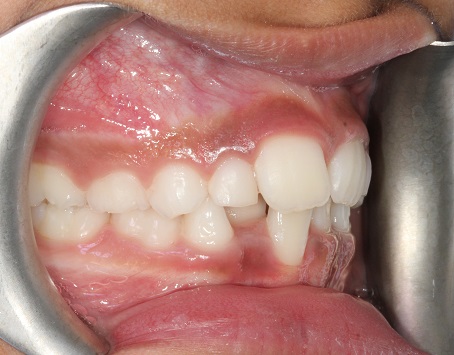
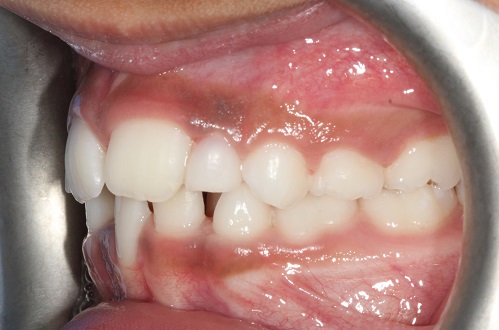
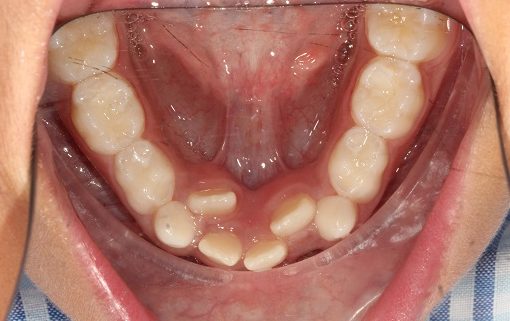
- Severe ectopic eruption — the lower right central incisor erupted entirely out of the normal arch line, trapped deep down on the lingual side (near the tongue) due to zero available room.
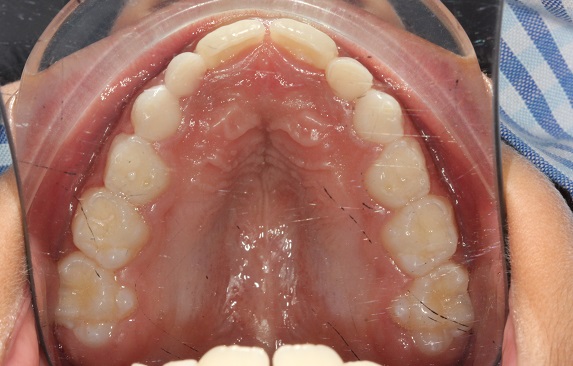
- Severe mandibular & maxillary crowding — an acute lack of available arch length in both jaws, leaving incoming permanent teeth without space to align naturally.
- Deep bite (overbite) — the upper teeth overlapped the lower teeth excessively, hiding the lower front teeth from view and restricting natural lateral jaw movements.
- Constricted maxillary arch — a narrow, high-arched upper jaw that severely limited the perimeter space required for the anterior teeth.
What We Found
- Extreme crowding and space deficiency in both dental arches during a critical growth phase.
- A severe discrepancy between the size of his developing permanent teeth and his available jaw width.
- The dramatic malposition of the lower central incisor placed stress on the surrounding gum tissues and limited functional chewing balance.
Before
Severe crowding, a narrow upper arch and the lower incisor trapped on the lingual side, well outside the normal arch line.
Why This Case Was Complex
Cases combining severe crowding with an ectopically erupting incisor are among the most demanding in orthodontics. The difficulty is not simply aligning the teeth — it is creating enough arch space, early enough, to safely guide a tooth that has erupted in the wrong location back into the arch line without damaging the root or the surrounding bone, while a deep bite and a narrow upper arch are corrected at the same time. Left untreated, cases like this frequently end up needing permanent tooth extractions, or even jaw surgery, once growth is complete. Careful early diagnosis and a staged treatment plan make it possible to resolve the whole problem using orthodontic movement alone.
Treatment Objectives
- Gain sufficient arch width and length to accommodate all permanent teeth without extractions
- Safely guide the lingually trapped lower central incisor into the arch line
- Resolve the severe crowding in both the upper and lower arches
- Correct the deep bite and open the vertical bite to a healthy, functional relationship
- Coordinate the upper and lower arch forms so they fit together properly
- Establish a stable, symmetrical and aesthetically balanced smile
- Protect the result long-term with an appropriate retention plan
The Plan
- Stage 1 (Interceptive phase): utilize early orthopedic expansion and targeted braces to widen the upper jaw, manage the jaw perimeter, and create the necessary space for the blocked-out teeth.
- Stage 2 (Definitive phase): apply full traditional braces on the permanent dentition to perfectly align the remaining teeth, establish optimal arch coordination, and level his overall vertical bite.
What We Did
- Phase 1 intervention: widened the narrow upper jaw to eliminate the severe constriction and gain vital arch width. Fixed braces were placed on key teeth to systematically open up space in both the upper and lower arches.
- Ectopic tooth management: harnessing the space gained during the expansion phase, gentle forces were applied to carefully pull the lingually trapped lower central incisor forward into its correct position within the lower arch arc.
- Phase 2 finishing: after the remaining permanent teeth erupted, full traditional metal brackets and sequential archwires were placed. This step fine-tuned the root positions, closed the central gaps, and perfectly coordinated how the upper and lower arches fit together.
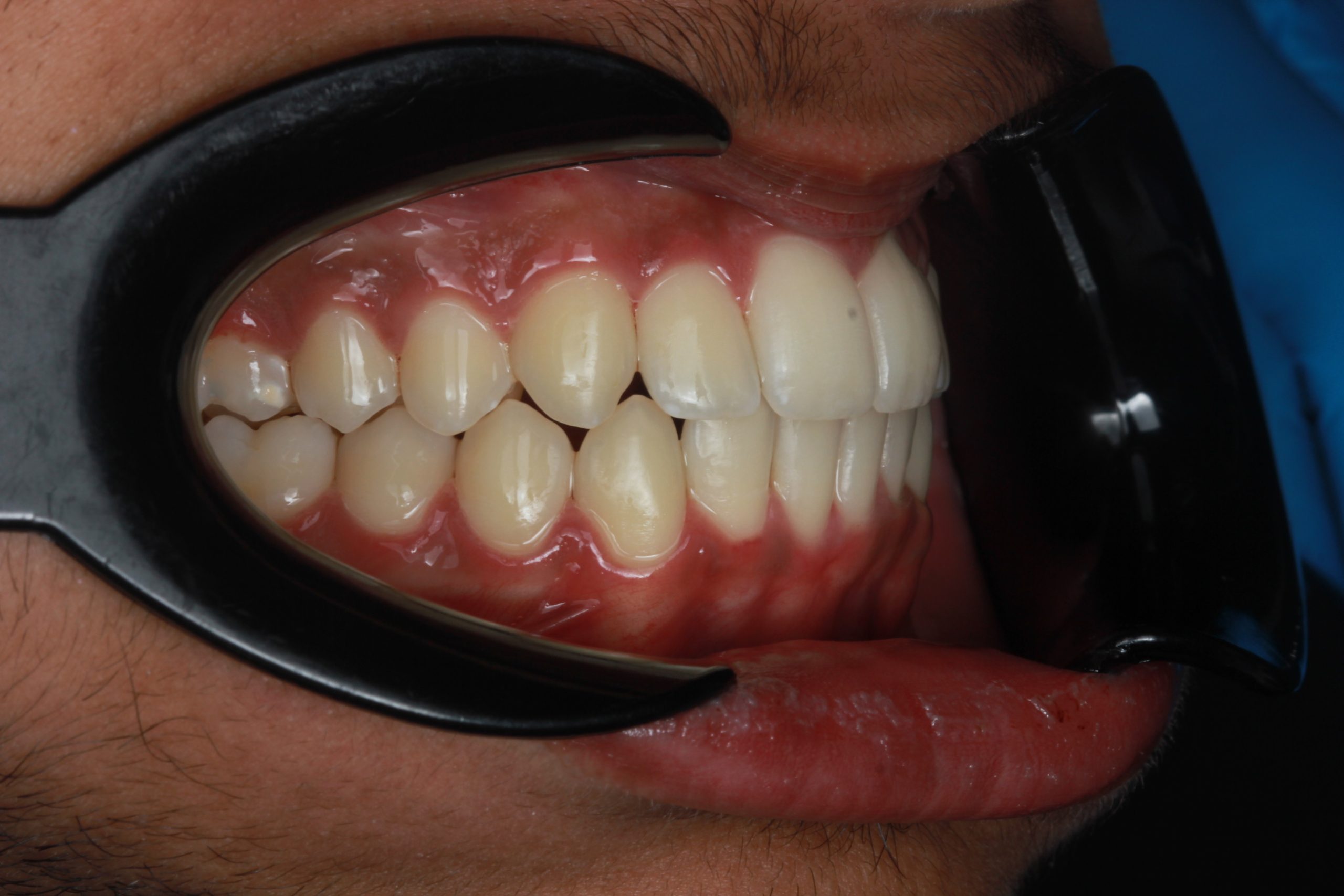
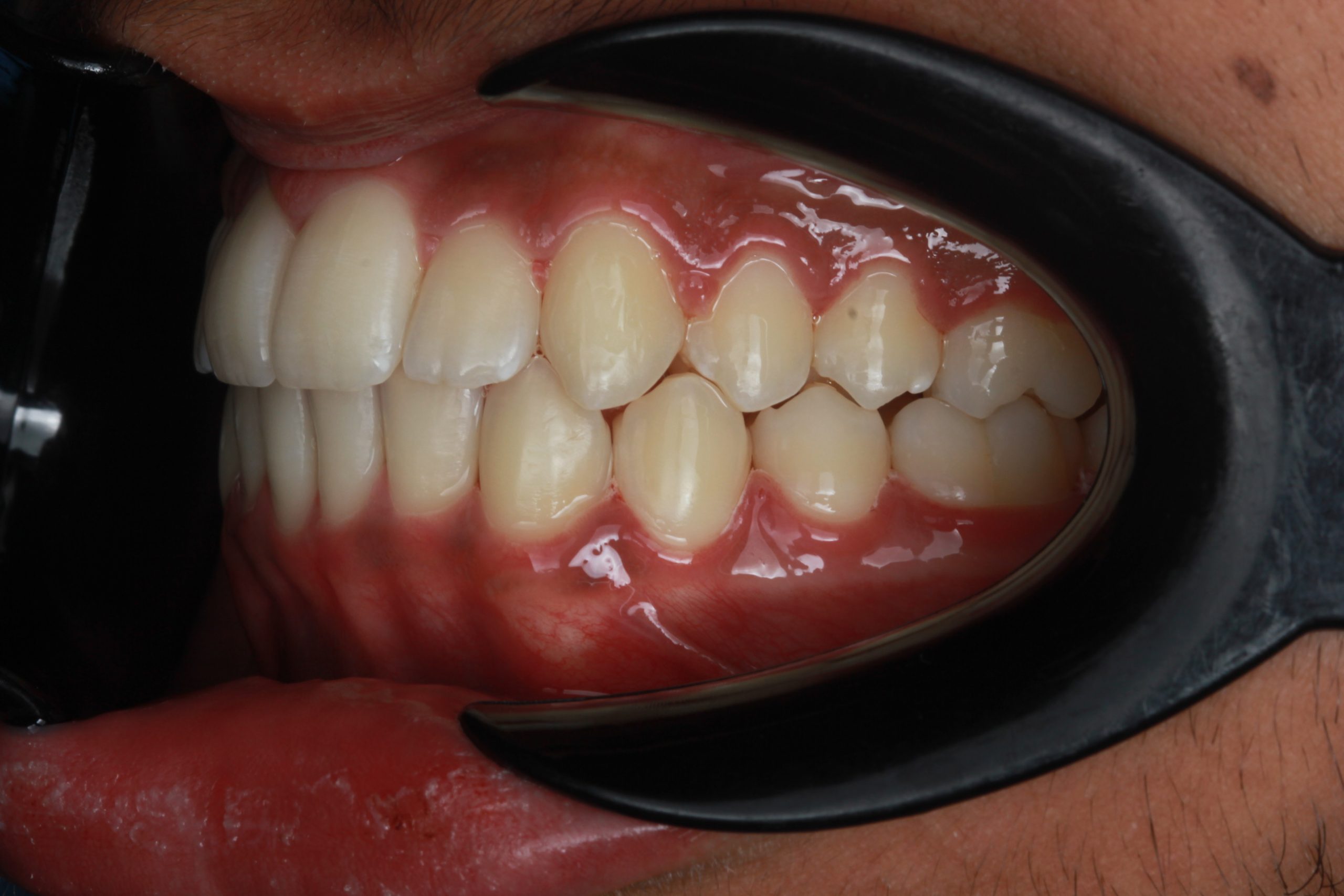
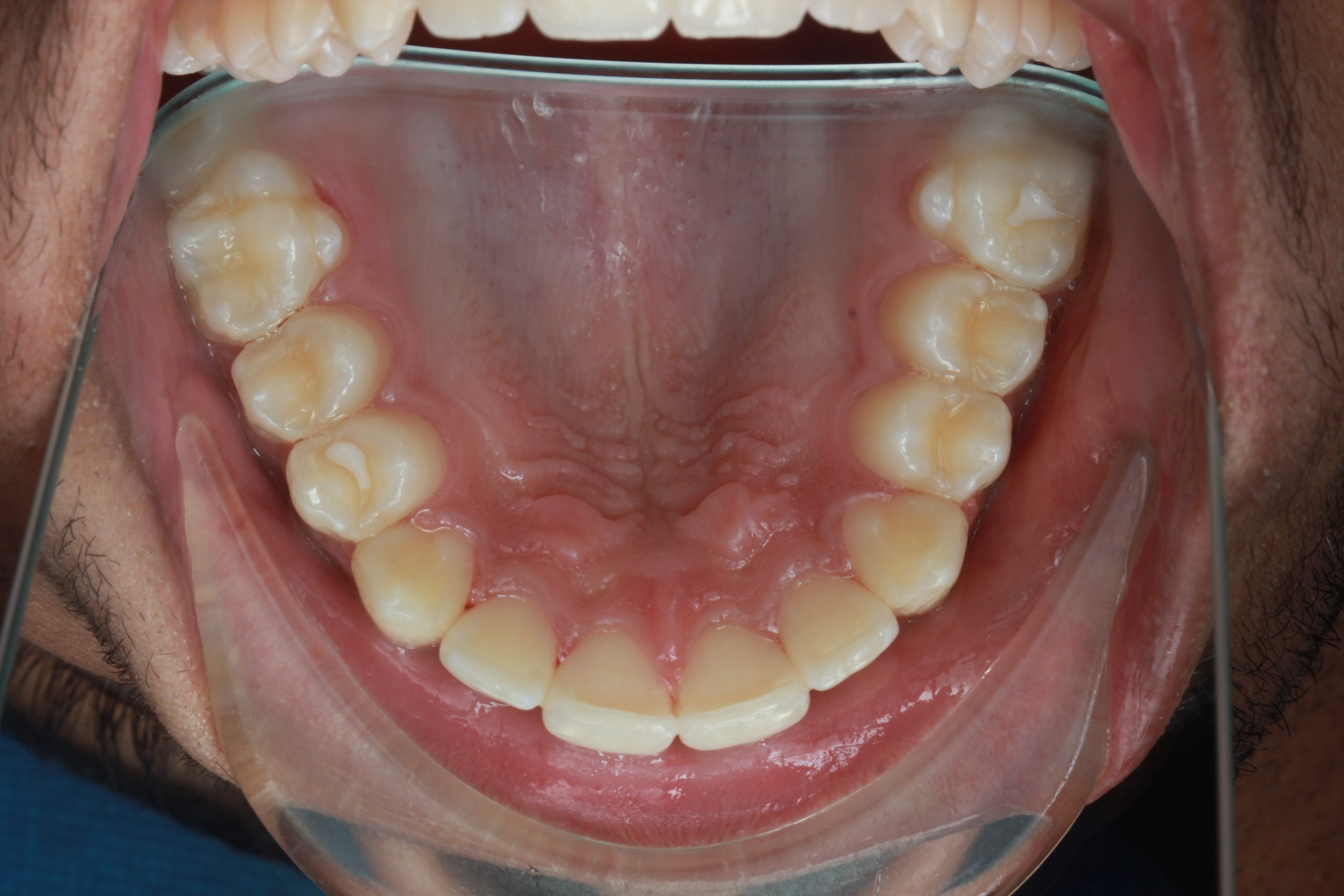
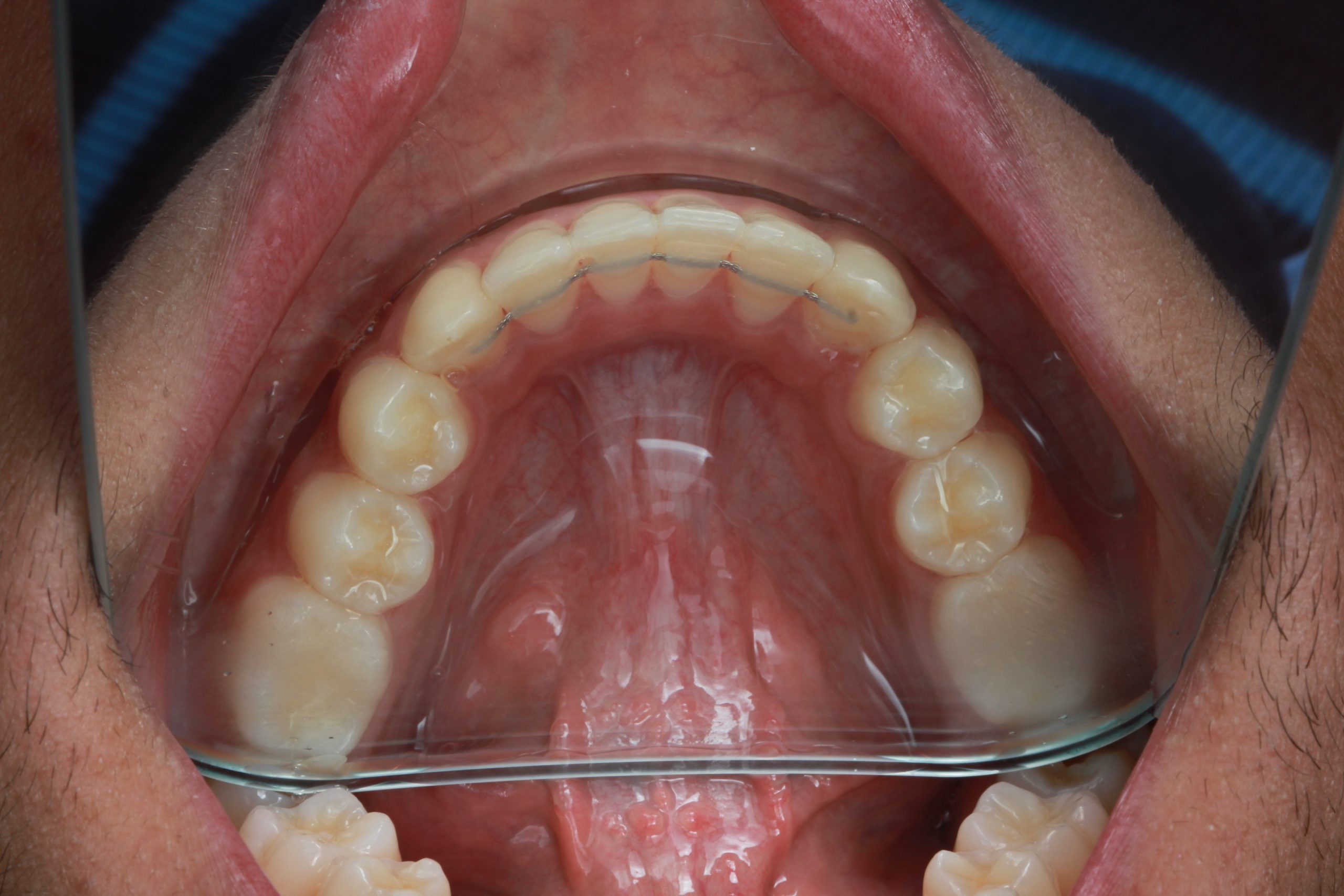
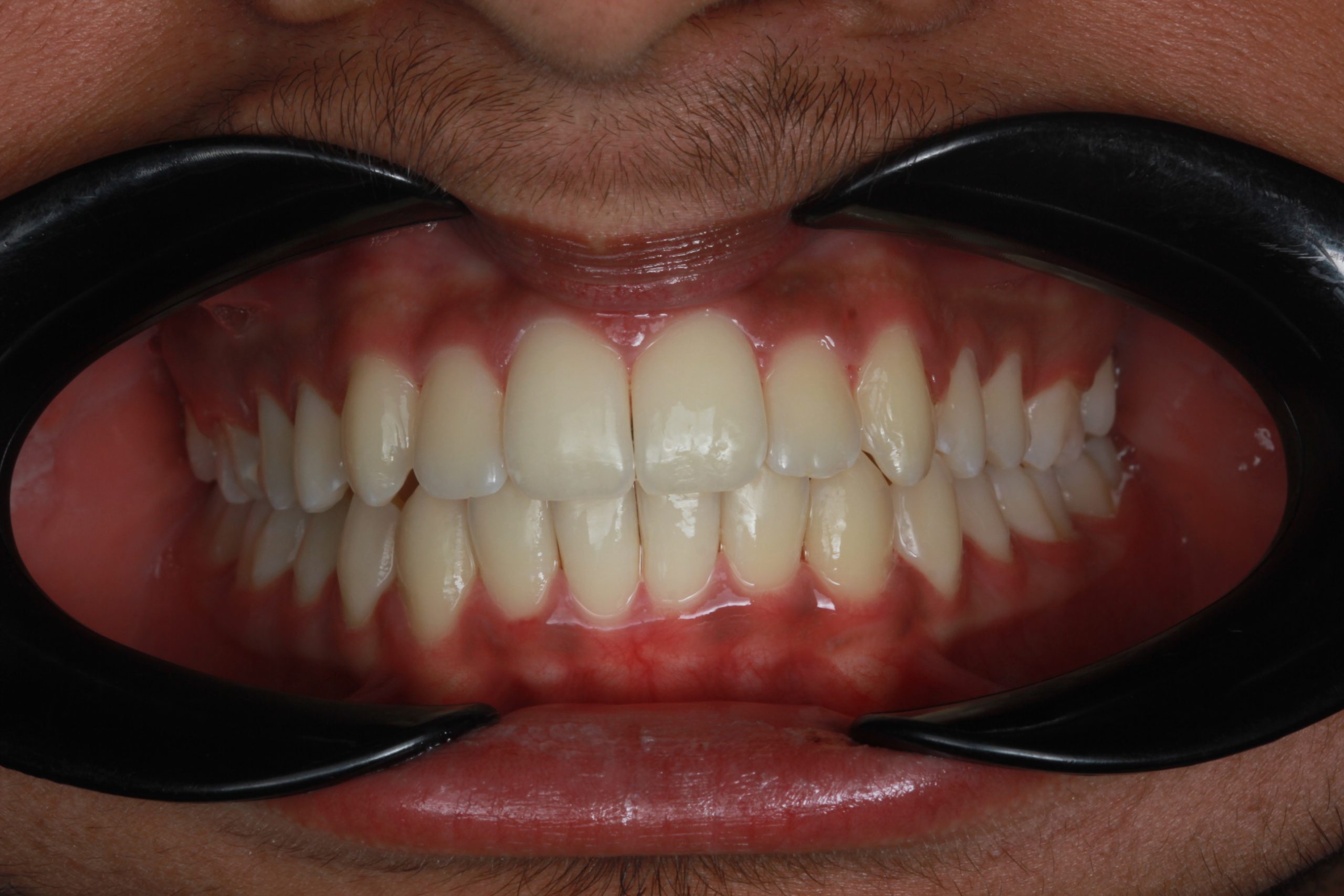
After
Widened, coordinated arches, a fully corrected bite, and the once-trapped incisor now stable and well aligned within the arch.
The Result
- Beautifully widened, coordinated, and symmetrical upper and lower arch forms.
- The severely displaced lower central incisor was safely brought into the arch line and displays excellent alignment and stable bone support.
- Full resolution of the severe crowding in both the upper and lower teeth.
- A healthy, structural, and highly functional bite that supports normal jaw development into adulthood.
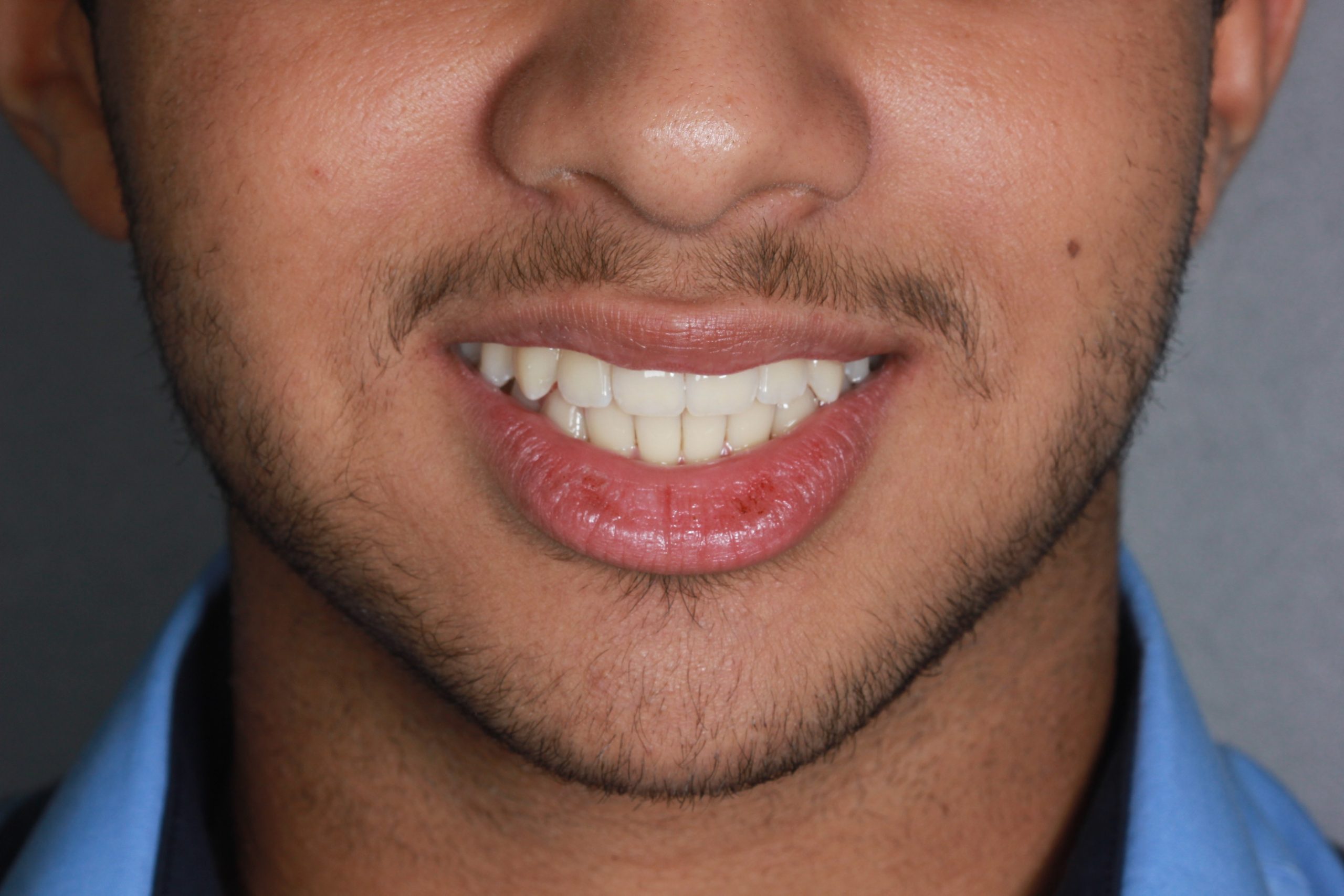
The Final Smile
A wide, balanced, and fully functional smile – the result of a treatment plan carried through from early intervention to a completed adult dentition.
Retention (Keeping the Result)
- Fixed retainers: a multi-strand wire bonded seamlessly behind the front teeth to protect the aligned incisors against relapse.
- Removable retainers: customized clear overlay retainers worn diligently at night to preserve the expanded jaw width.
What Changed Most
By initiating interceptive treatment at age 8, we successfully resolved an extreme crowding dilemma and avoided the need for complex permanent tooth extractions or jaw surgeries later in life. His teeth were guided from a severely trapped, lingual position into a wide, balanced, and healthy smile line that functions beautifully.
Home Care Instructions & Recommendations
- Brush after every meal and floss daily, paying particular attention to the wire bonded behind the lower front teeth – food and plaque collect around it easily.
- Use a floss threader or an interdental brush to clean under the fixed retainer wire at least once a day.
- Wear the removable retainer exactly as prescribed, especially at night – skipping nights is the most common cause of gradual relapse and re-crowding.
- Clean the removable retainer daily with a soft brush and lukewarm water; avoid hot water, mouthwash soaks, or toothpaste, as these can distort or scratch the plastic.
- Avoid biting directly into hard foods (nuts, ice, hard bread crusts) with the front teeth, and avoid sticky foods that can dislodge the bonded retainer.
- If the fixed retainer ever feels loose, sharp, or comes away from a tooth, stop using that side to bite and contact the clinic promptly rather than waiting for the next routine visit.
- Keep up regular dental check-ups and cleanings with your general dentist alongside your orthodontic retention visits.
Frequently Asked Questions
Can a tooth trapped on the wrong side of the arch really be corrected without extractions?
In many cases, yes – provided there is a clear plan to create the missing space first. Early interceptive expansion is what made it possible to guide this incisor back into the arch safely, without removing any permanent teeth.
Why was treatment split into two separate stages instead of one continuous course?
The first stage addressed a problem that could only be treated while the jaws were still developing (expansion and space creation). The second stage waited until the remaining permanent teeth had erupted, so they could be aligned and finished properly in one pass rather than being moved twice.
Will the crowding come back after braces are removed?
Some relapse is possible with any orthodontic case, which is exactly why a fixed bonded retainer and a nightly removable retainer were both used here. Worn as instructed, they are very effective at holding the corrected arch width and alignment long-term.
How long do the retainers need to be worn?
The fixed lingual retainer is designed to stay in place indefinitely. The removable retainer should be worn nightly, essentially for life, since teeth can continue to shift slowly with age even long after treatment ends.
What should I do if I notice any movement or a change in my bite?
Contact the clinic as soon as you notice anything, rather than waiting for your next scheduled visit. Small changes are far simpler to manage early. This is also why we recommend a dedicated check-up around the 1-year mark, even if nothing feels different.
Thinking About Orthodontic Treatment for Your Child?
Early diagnosis is what turns a complex case like this one into a straightforward, extraction-free correction. Book a specialist assessment to find out what your child's treatment plan and timeline would look like.
Book Your Consultation