
Adult Invisalign Case Study in Abu Dhabi: Deep Bite, Crowding and Narrow Smile Correction
Many adults are told that clear aligners only work for minor tooth movements. This case shows otherwise. With accurate diagnosis and carefully staged treatment planning, Invisalign clear aligners corrected a deep bite, relieved lower front crowding and widened a narrow smile, all without fixed braces.
Below is a full breakdown of the diagnosis, the treatment plan and the result achieved at our specialist orthodontic clinic in Abu Dhabi.
Case summary at a glance
| Patient | Adult, seeking treatment without visible braces |
|---|---|
| Main concerns | Deep bite, lower crowding, prominent upper right lateral incisor, narrow smile |
| Appliance used | Invisalign clear aligners |
| Key challenge | Deep bite correction. One of the harder movements to achieve with aligners |
| Outcome | Deep bite reduced, arches aligned, fuller and more symmetrical smile |
| Retention | Fixed retainers plus removable night retainers |
The patient's main concerns
This adult patient attended our Abu Dhabi orthodontic clinic wanting a more balanced smile without committing to fixed appliances. Their concerns were:
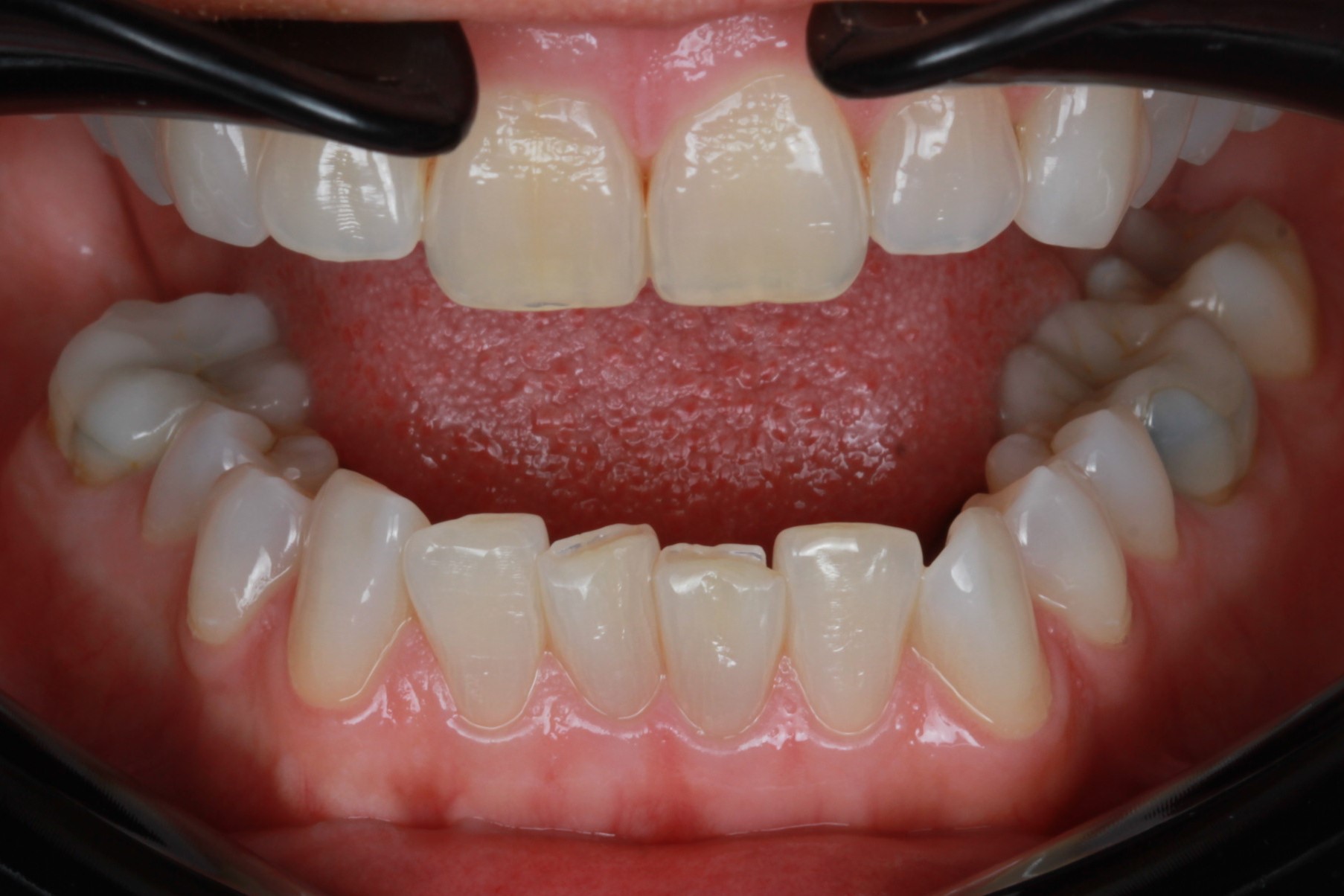
- Crowded and overlapping lower front teeth
- A prominent upper right lateral incisor that stood out when smiling
- A deep bite, with the upper front teeth overlapping the lower teeth excessively
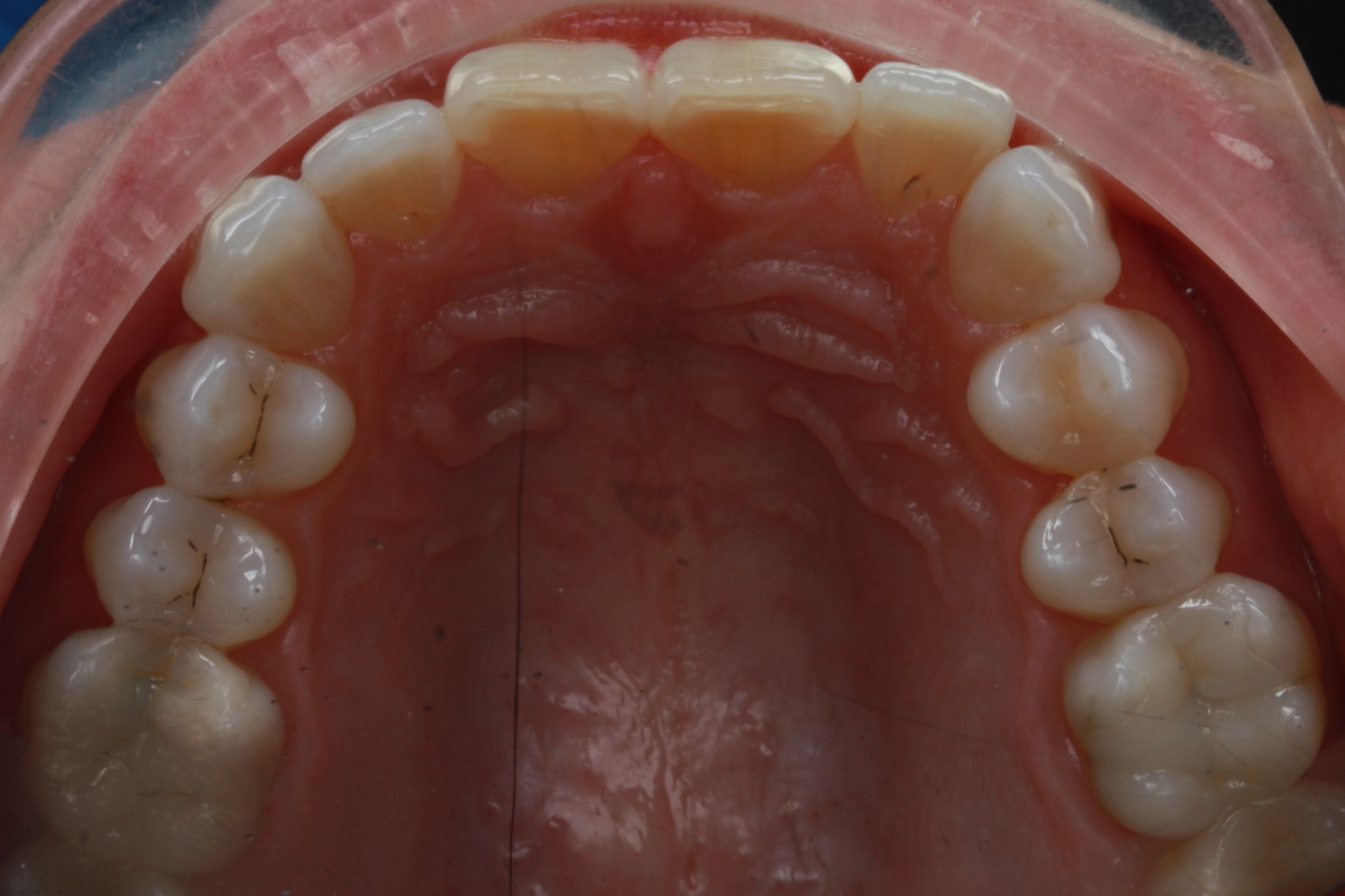
- A narrow smile with dark spaces (buccal corridors) at the corners
- A square upper arch form that contributed to the crowding
Because the patient wanted a discreet option, treatment was planned through adult orthodontics in Abu Dhabi using aligners rather than fixed braces.
Initial orthodontic assessment
Clinical examination revealed a combination of aesthetic and functional problems affecting both arches.
Deep bite
The upper front teeth covered a significant portion of the lower incisors, so much so that the lower front teeth were almost completely hidden when the patient bit together.
A deep bite is not only a cosmetic issue. Left untreated, it can contribute to accelerated wear of the front teeth, increased load on the supporting structures, and long-term bite instability.
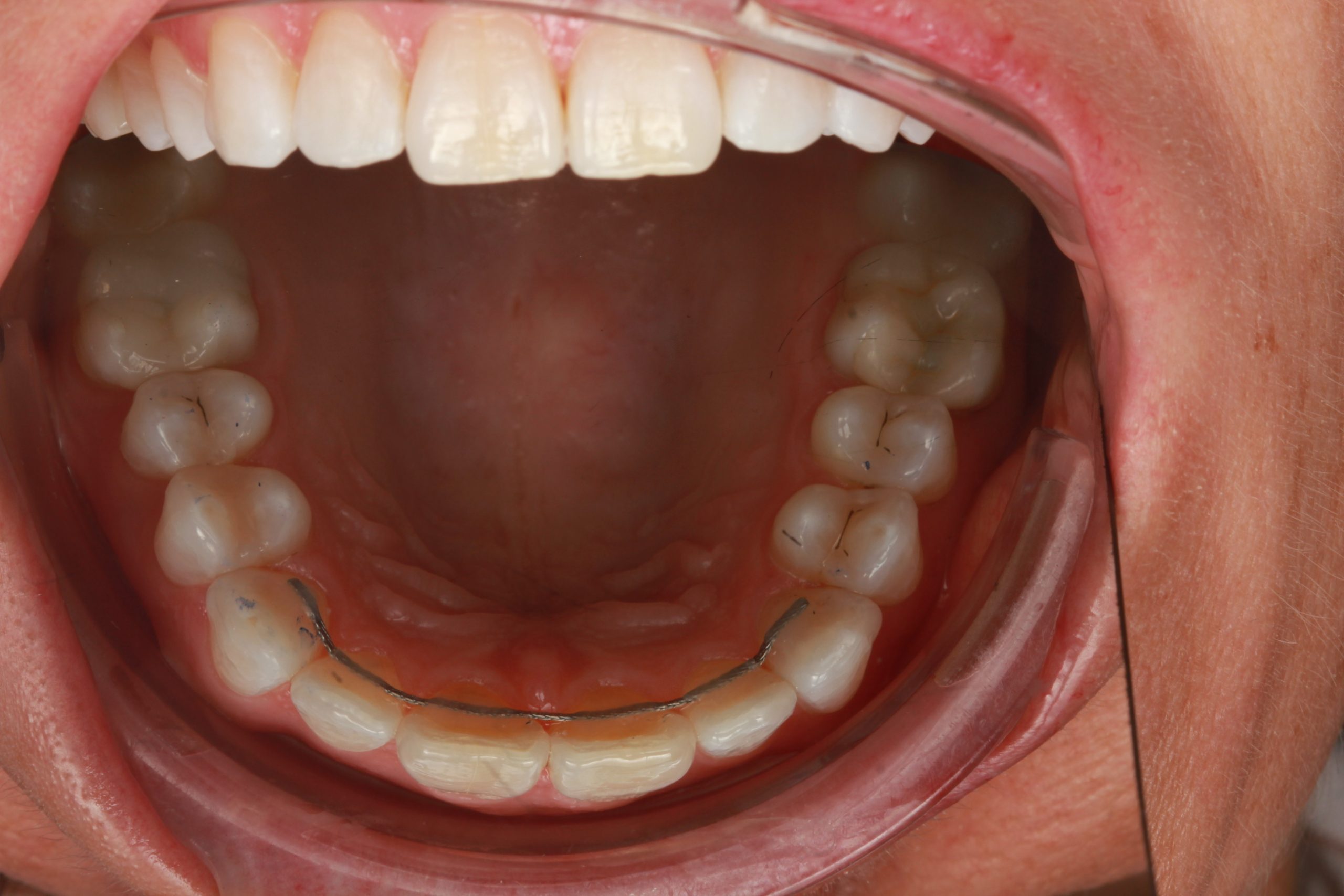
Lower anterior crowding
The lower front teeth were rotated and overlapping because there was not enough space within the arch to accommodate them. Crowding of this type also makes cleaning harder, which raises the risk of decay and gum inflammation over time.
Prominent upper right lateral incisor
The patient's chief complaint was a single upper right lateral incisor sitting further forward than the neighbouring teeth, drawing the eye whenever they smiled.
Narrow smile and dark corridors
The upper arch was constricted, leaving dark shadowed spaces at the corners of the smile. These buccal corridors make a smile look narrower and less full, even when the front teeth themselves are straight.
Square arch form
Although the arch looked broad in places, its overall square shape reduced the space available across the front of the mouth and worsened the crowding.
Before
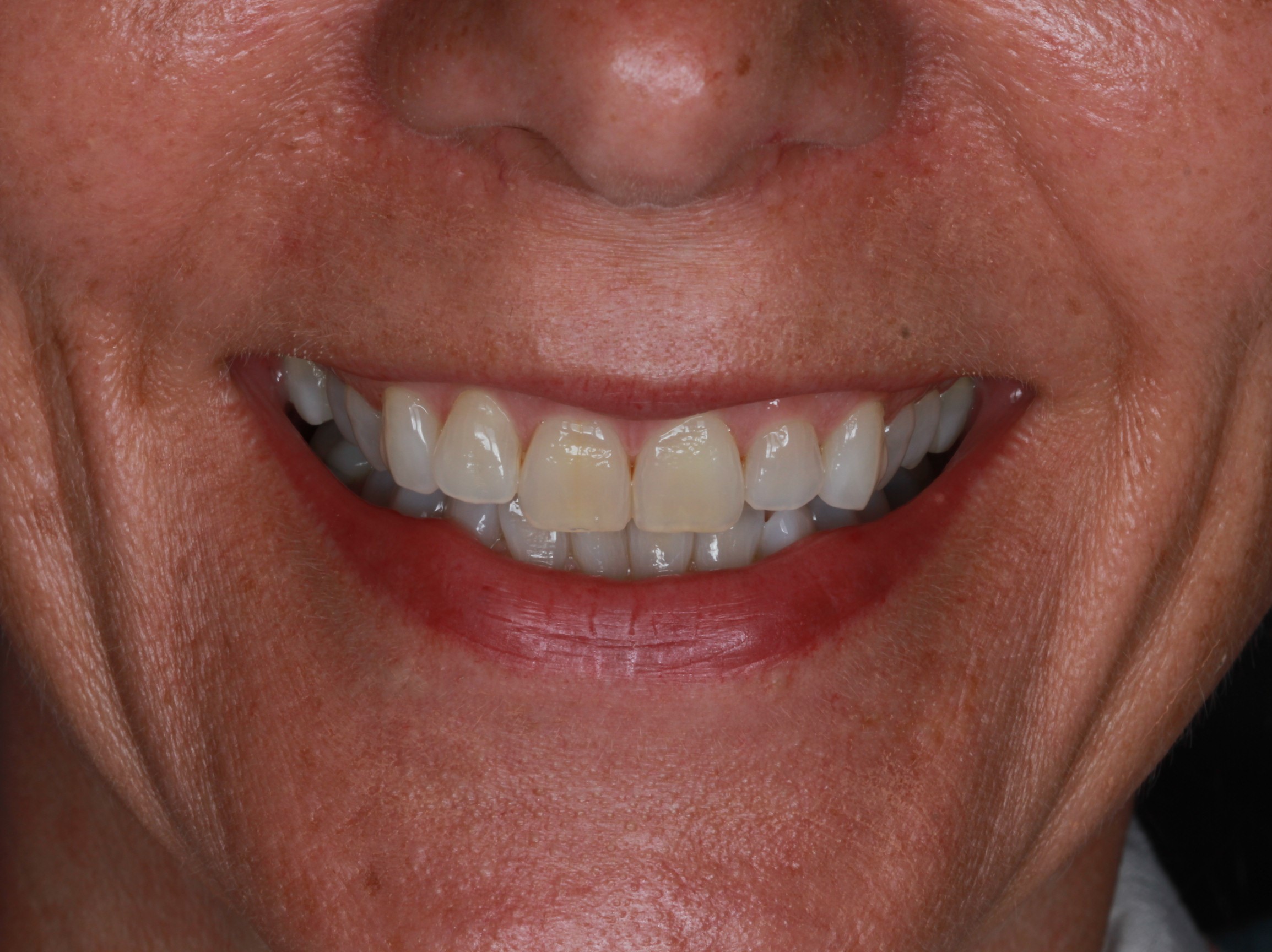
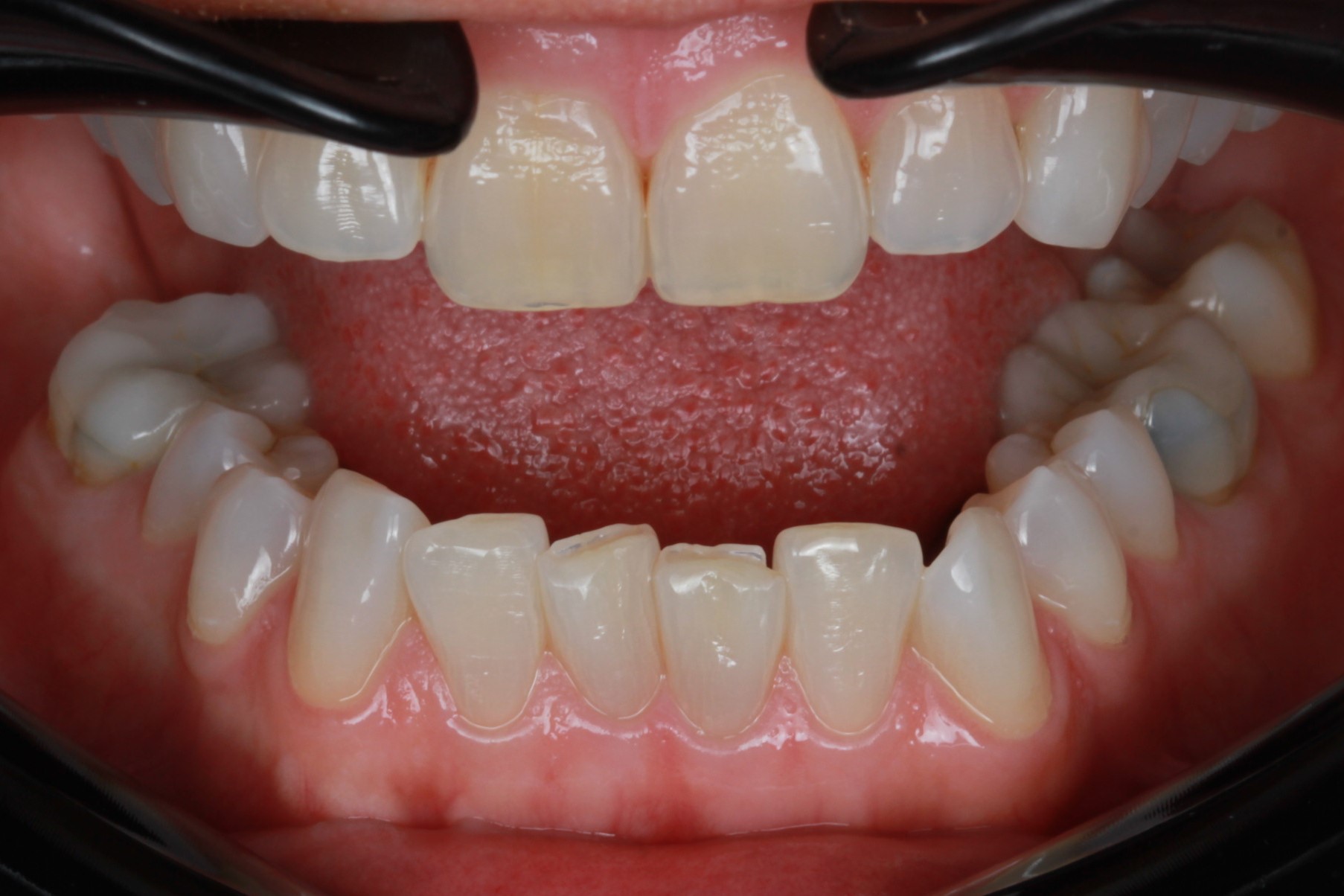
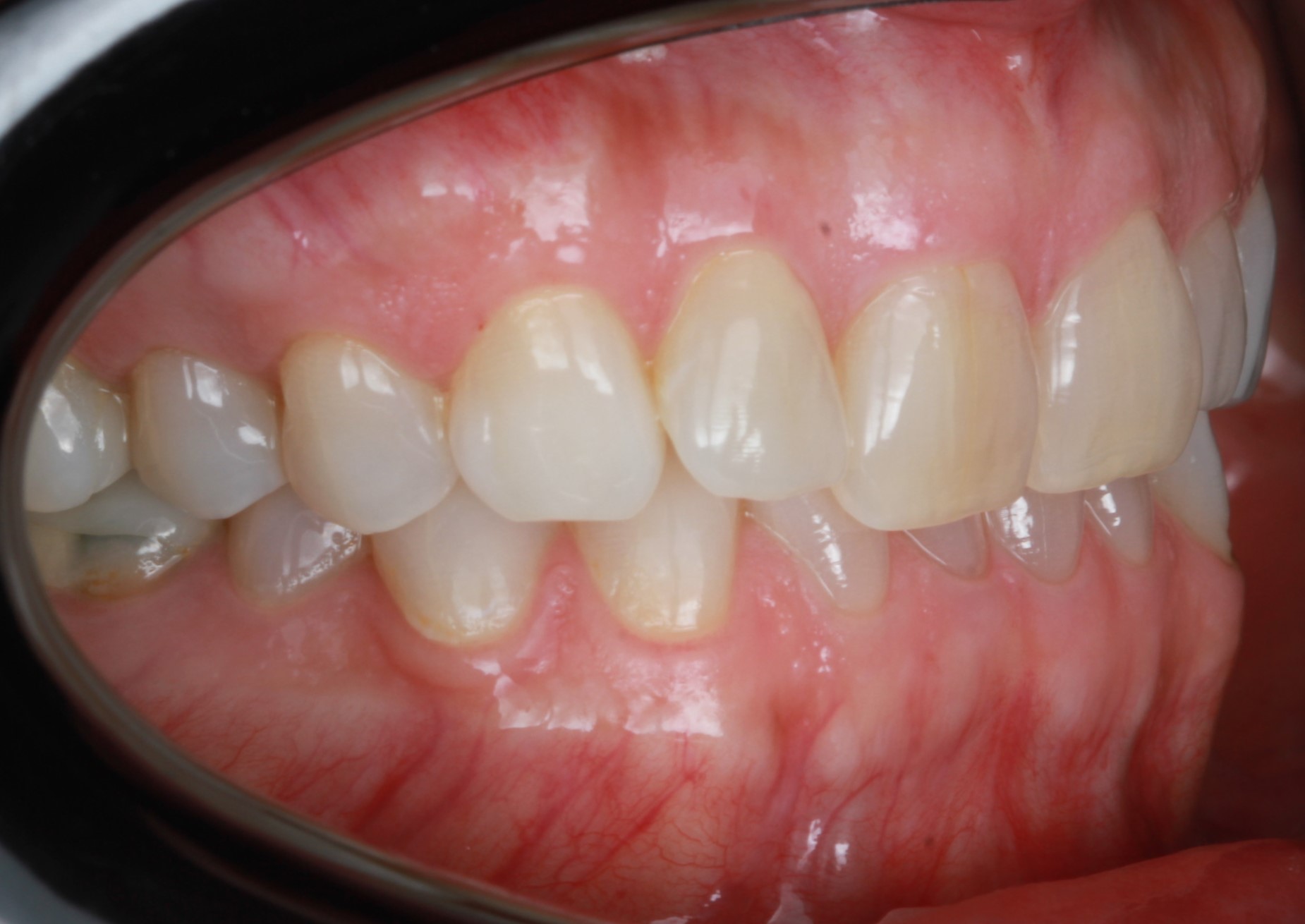
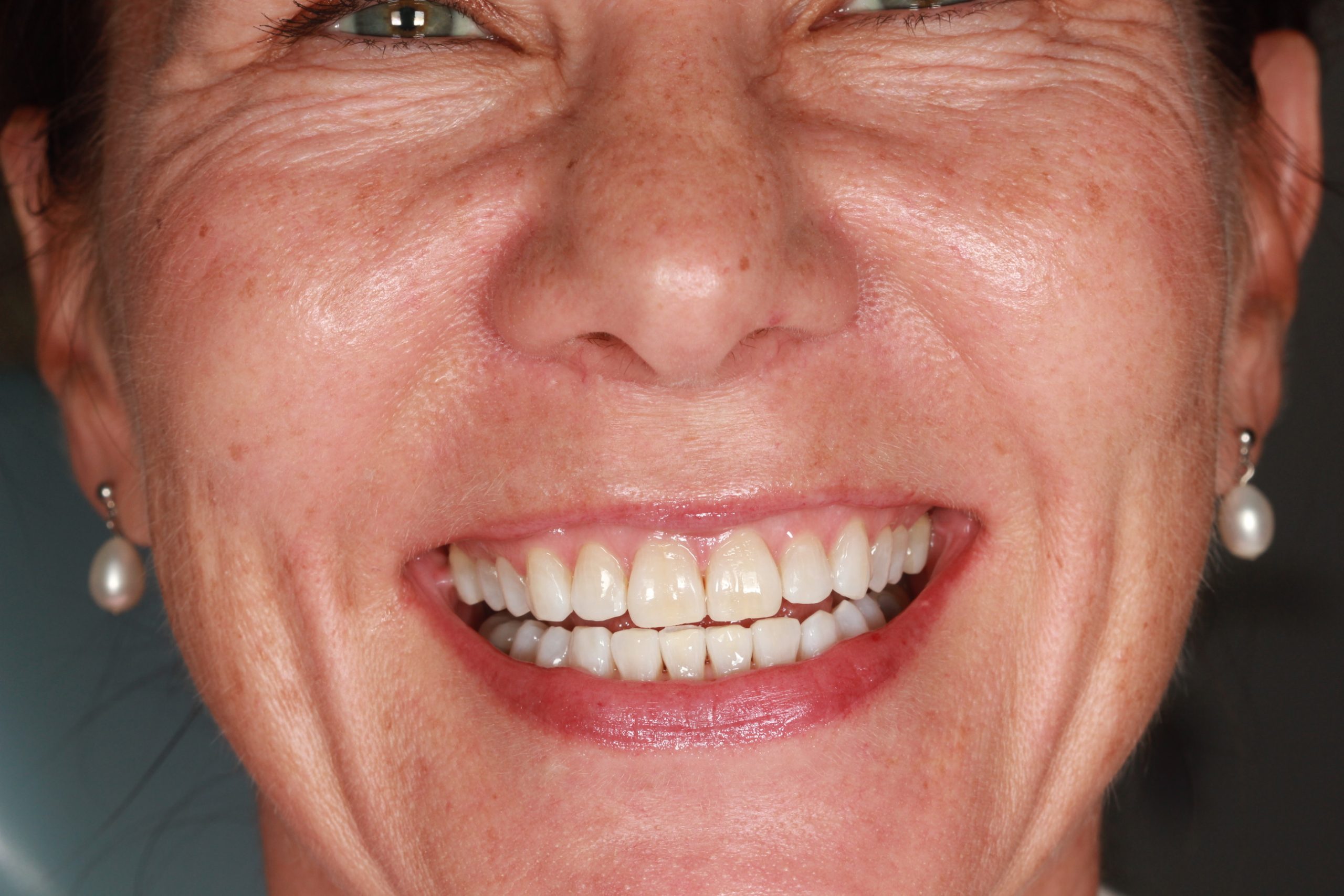
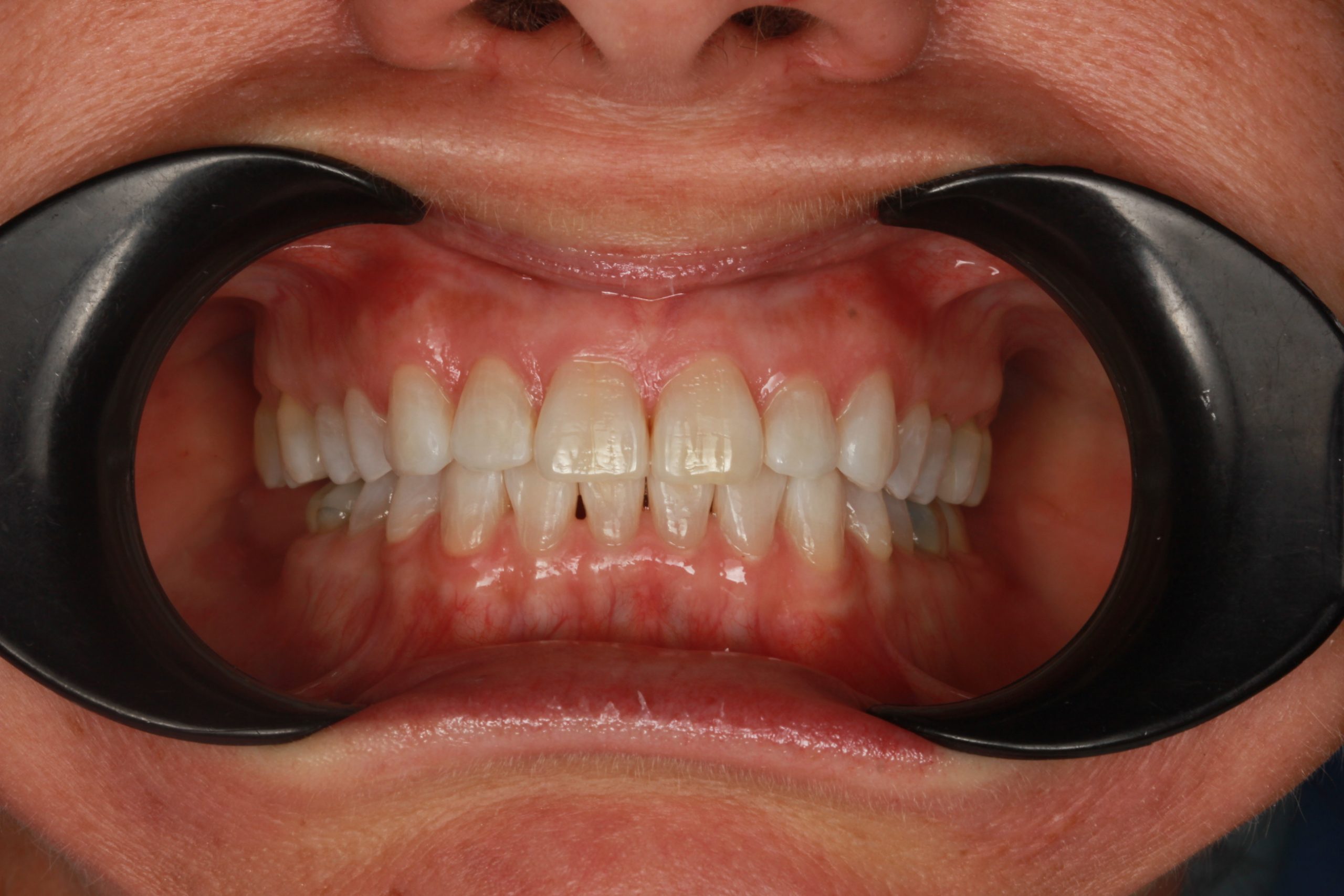
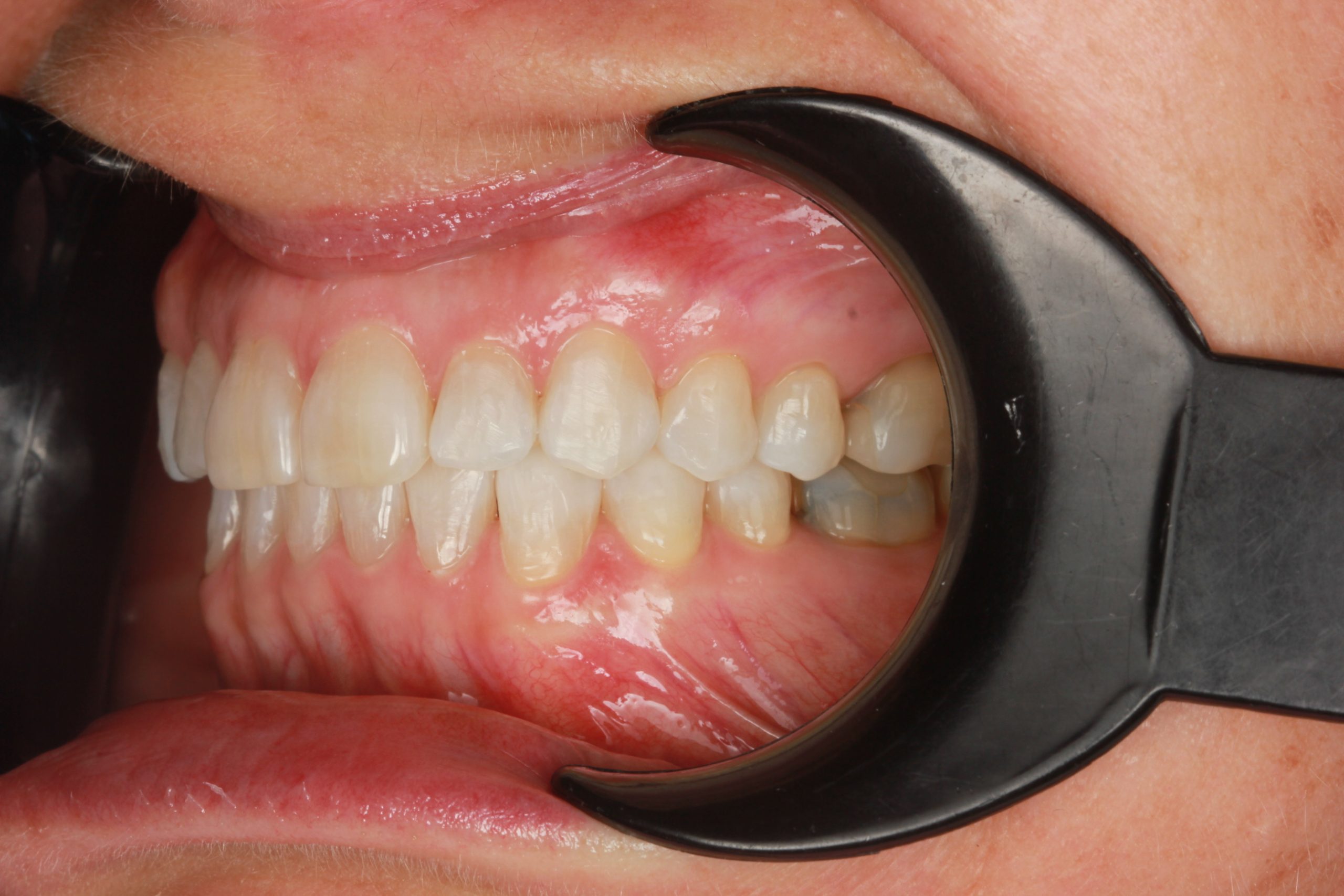
After
Why many orthodontists avoid deep bite cases with Invisalign
Deep bite correction is widely regarded as one of the most demanding movements to achieve with clear aligners, which is why many clinicians still default to fixed appliances for moderate to severe cases.
The difficulty is not straightening the teeth. It is controlling vertical movement, intruding the front teeth, managing bite opening mechanics and sequencing each stage correctly. Without that control, aligners can deliver straight teeth while leaving the deep bite essentially unchanged.
Modern digital treatment planning and improved aligner biomechanics have made this far more predictable than in the early years of clear aligner therapy. If you are weighing up your options, our guide on how clear aligners compare with braces explains where each appliance performs best.
Treatment objectives
- Correct the deep bite and reduce excessive overlap of the front teeth
- Relieve crowding of the lower front teeth
- Reposition the prominent upper right lateral incisor
- Improve smile symmetry and midline harmony
- Widen the arch form to create a fuller smile and reduce dark corridors
- Establish a stable, functional bite
- Deliver all of the above using Invisalign clear aligners
The Invisalign treatment plan
Treatment was completed entirely with Invisalign clear aligners. The digital plan was designed to:
- Relieve lower anterior crowding through arch development and selective space creation
- Align both the upper and lower arches
- Intrude selected teeth to open the deep bite
- Bring the upper right lateral incisor back into the arch line
- Coordinate the upper and lower arch forms
- Broaden the smile arc and reduce buccal corridors
- Finish with a balanced, stable occlusion
Staging was the deciding factor in this case. Rather than attempting every movement simultaneously, tooth movements were sequenced so that bite opening progressed predictably while the aligners maintained good tracking throughout. Regular review appointments allowed refinements where needed and kept treatment on schedule.
We have used similar staging principles in other complex aligner cases, including this Invisalign open bite correction, as well as in an adult braces bite correction case where fixed appliances were the better fit.
Results
At the completion of treatment:
- The deep bite was significantly reduced and the lower incisors were visible on smiling
- Lower incisor crowding was fully resolved
- The upper right lateral incisor was aligned with the adjacent teeth
- The smile appeared fuller, wider and more symmetrical, with reduced dark corners
- Alignment improved across both arches
- The bite became more functional and stable
- The aesthetic result was achieved without any fixed braces
The outcome delivered both cosmetic and functional improvement while preserving the discretion and convenience that led the patient to choose clear aligners in the first place.
The process
Retention: protecting the result
Orthodontic results are only as durable as the retention protocol that follows them. This patient was provided with:
- Fixed (bonded) retainers where clinically appropriate
- Removable night-time retainers for long-term wear
Deep bite cases in particular have a tendency to relapse if retention is neglected, so consistent night-time wear is recommended indefinitely. You can read more about the options on our orthodontic retainers page.
Frequently asked questions
Can Invisalign really fix a deep bite?
Yes. Deep bite correction with clear aligners is achievable when the case is properly diagnosed and the vertical movements are staged correctly. It depends far more on the treatment plan than on the aligner brand. Severe skeletal deep bites may still require fixed braces or combined treatment.
How long does adult Invisalign treatment take in Abu Dhabi?
Timelines vary with case complexity. Mild alignment cases can finish in a few months, while combined deep bite and crowding cases like this one typically take longer. You will receive a defined timeline after your assessment and digital scan.
Is Invisalign suitable for crowded lower teeth?
In most cases, yes. Crowding is resolved through arch development, controlled tooth movement and, where needed, minimal interproximal reduction. Our guide on whether braces or aligners suit you covers how the decision is made.
Will treatment make my smile wider?
Arch expansion and improved arch form can reduce the dark spaces at the corners of the smile, producing a fuller appearance. How much change is achievable depends on your existing arch shape and bone support.
Do I need to wear retainers forever?
Teeth move throughout life. Long-term night-time retainer wear is the most reliable way to preserve alignment, especially after deep bite correction.
Considering Invisalign in Abu Dhabi?
Many adults assume clear aligners only handle mild crowding or simple cosmetic corrections. This case shows that, in experienced hands, Invisalign can treat more complex problems including deep bites, crowding and smile width concerns.
The appliance is not what determines the result. Diagnosis, treatment planning and staging of tooth movements are.
If you are considering Invisalign treatment in Abu Dhabi, book a specialist orthodontic assessment to find out whether clear aligners are the right option for your smile and bite.