
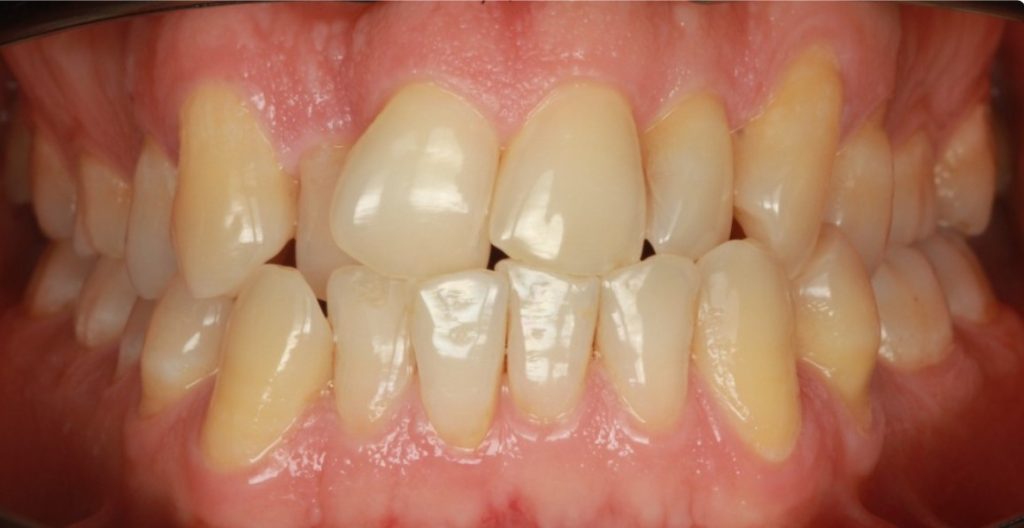
Most people picture a teenager when they think of braces, yet a large share of orthodontic patients today are working adults, usually somewhere between the ages of 25 and 55. Some never had treatment as children. Others wore braces years ago, stopped using their retainers, and watched their teeth slowly drift back. The reason for treating them now is the same in both cases: straight, well-aligned teeth are easier to keep healthy, more comfortable to chew with, and, for many people, a quiet boost to how confident they feel in a meeting or a photograph.
The good news is simple. Teeth move at 40 in much the same way they move at 14, because the biology of tooth movement does not switch off with age. At our practice, led by specialist orthodontist Dr. Saba Al-Hadithi with 20 years of experience, planning starts with a proper diagnosis rather than a guess, and the first consultation is free. If you want a fuller picture of what treatment involves later in life, our guide to adult orthodontics in Abu Dhabi sits alongside everything covered here.
Easier cleaning, healthier gums
Crowded and overlapping teeth trap plaque where a brush and floss cannot reach. Once teeth are aligned, daily cleaning actually works, which lowers the risk of decay and gum disease over the years that follow.
A bite that works properly
An overbite, underbite, crossbite, or deep bite changes the way you chew and can strain the jaw over time. Correcting alignment helps food break down more efficiently and shares the load evenly across your teeth.
More confidence in your smile
For many adults this is the deciding factor. Feeling at ease when you laugh, present, or appear in photos affects social and professional life, and straighter teeth often bring better proportion between the teeth and the face.
Two further benefits are easy to overlook. Alignment can sharpen speech, since gaps and crowding sometimes blur the way certain sounds are formed, and evenly meeting teeth wear down far more slowly than teeth that grind against each other at the wrong angle. Together these are the reasons orthodontists describe treatment as a long-term investment in oral health, not only in appearance.

Appearance and speech
A smile you do not think twice about is easy to take for granted until you have one. Adults who finish treatment often notice they stop covering their mouth in photographs, speak up more readily in meetings, and feel steadier in social settings where a confident smile matters. None of this is vanity: how we carry ourselves is shaped by how comfortable we feel.
Clearer pronunciation can come with it. When front teeth are crowded, spaced, or sitting at an awkward angle, certain sounds are harder to form cleanly. Closing those gaps and settling the teeth into a balanced arch frequently makes speech feel more natural, which is a benefit most people do not expect when they first ask about braces.
What braces correct
Braces and aligners do far more than tidy a crooked front tooth. A specialist assessment will tell you which of these apply to you and how much movement each one needs.
This is the question we hear most, and the honest answer is reassuring. There is no upper age limit for braces. As long as your gums and the bone supporting your teeth are healthy, teeth can be moved at almost any age, which is exactly why so many of our patients are in their thirties, forties, and fifties. The main thing an orthodontist checks first is gum and bone condition, not the number on your passport.
A lower limit is a different matter. Young children are usually assessed rather than treated straight away, because their jaws are still growing and some problems are better watched before any appliance goes on. That early growth phase belongs to pediatric care, while adults benefit from a fully developed jaw that gives the orthodontist a stable, predictable foundation to work with.
Adults are not limited to the metal braces of the past. There are several options, and the right one depends on the complexity of your case and how visible you want treatment to be. With fixed braces treatment on one side and removable trays on the other, most preferences can be met.
Metal braces
The most cost-effective and versatile option, well suited to more complex movements.
Ceramic braces
Tooth-coloured brackets that blend in, a discreet choice that still works like fixed braces.
Lingual braces
Fitted behind the teeth so they stay out of sight from the front entirely.
Clear aligners
Removable, near-invisible trays, including Invisalign and Angel aligners, worn 20 to 22 hours a day.
Both straighten teeth by applying gentle, steady pressure. The difference is how that pressure is delivered and how it fits your daily routine. For mild to moderate cases either can work well, while more complex bite corrections often favour fixed braces. If you want to weigh this up in detail, see how clear aligners compare with fixed braces.
| Consideration | Fixed braces | Clear aligners |
|---|---|---|
| Visibility | Visible, ceramic less so | Near invisible |
| Best suited to | Mild to complex cases | Mild to moderate cases |
| Removable | Fixed in place | Yes, for meals and cleaning |
| Daily commitment | Works on its own | Worn 20 to 22 hours a day |
| Cleaning | Brush around brackets | Take out, then brush as normal |
Discretion is the usual reason adults lean toward aligners, which is why they appeal to professionals who present or meet clients often. Aligners only work while they are in your mouth, so they reward consistency. A specialist will tell you, honestly, whether your case is one where either route gives a good result or where fixed braces are the more dependable choice.
Consultation and scan
A free first consultation and a digital scan capture your teeth in detail, with no messy impressions.
Diagnosis and plan
A diagnosis-first plan maps the movements your case needs and sets a realistic timeline before anything begins.
Active treatment
Braces or aligners do the work, with short check-ups every few weeks to guide progress in phases.
Retention
Once teeth are in place, a retainer holds the result, the step that prevents the drift many adults regret skipping.
That diagnosis-led, phased approach is built on experience: across more than 1,000 completed cases and a 98% satisfaction rate, the pattern is consistent. Clear scanning at the start and steady follow-up through to retention are what turn a plan into a lasting result.

Built around your case
Digital scanning lets the plan be shaped to your exact teeth rather than an average. That matters for adults, whose cases are often more individual than a teenager's: a single rotated tooth, a long-standing gap, or a bite that has shifted after years without a retainer. The treatment is matched to what your mouth needs, and nothing it does not.
Most adults wear braces for roughly 12 to 24 months, with many cases landing around 18 months. The range is wide because it depends on what is being corrected: a mild alignment issue can finish in about a year, while a complex bite correction takes longer. Because an adult jaw has finished growing, treatment can run slightly longer than it would for a teenager, which is normal and not a sign that anything is wrong.
As for discomfort, braces work by gentle, continuous pressure rather than sharp pain. It is common to feel some tenderness for a few days after fitting and after adjustments, usually eased by soft foods and ordinary pain relief, and it settles quickly. If you want a clear sense of what to expect with braces discomfort, our note on what to expect with braces discomfort walks through the first week and simple ways to feel better.
There is no single price for adult orthodontics, because the cost reflects your individual case. A few factors shape it: how much movement your teeth need, which appliance you choose, how long treatment runs, and whether your insurance contributes. Metal braces are generally the most economical, while lingual braces and some aligner systems sit higher because of the materials and customisation involved.
Rather than quote a figure that may not fit your situation, we give you a clear estimate after the free consultation, once your case has actually been assessed. Many insurance plans cover part of orthodontic treatment, so it is worth checking your policy and bringing the details along so the numbers can be discussed openly from the start.
A general dentist may offer braces among many other services. An orthodontist completes years of further training focused only on moving teeth and correcting bites, which is exactly the work an adult case calls for. That difference shows up in the diagnosis, the planning, and the steady follow-up that keeps a result stable. Our approach is to recommend only what your case genuinely needs, explain the options plainly, and set timelines you can rely on.
No. There is no upper age limit. As long as your gums and supporting bone are healthy, teeth can be moved well into your fifties and beyond. Most of our adult patients are between 25 and 55, and many had no treatment as children or are correcting teeth that shifted after braces years ago.
Yes. Braces and aligners address crowding, spacing and gaps, overbite, underbite, crossbite, open and deep bites, impacted canines, and general jaw alignment. A specialist assessment will confirm which apply to you and how much movement each needs.
A straighter, better-proportioned smile is the most visible result, and many adults feel more confident in photos, meetings, and social settings. Speech can also become clearer, because closing gaps and settling crowded front teeth often helps certain sounds form more cleanly.
Braces work through gentle, continuous pressure, not sharp pain. Expect mild tenderness for a few days after fitting and after each adjustment, usually managed with soft foods and ordinary pain relief. The discomfort settles quickly as your mouth adapts.
Most adult treatment runs roughly 12 to 24 months, often around 18 months, depending on how much correction your case requires. Because an adult jaw has finished growing, treatment can take a little longer than it would for a teenager.
Both straighten teeth effectively. Aligners are removable and discreet, which suits mild to moderate cases and busy professionals, but they must be worn 20 to 22 hours a day. Fixed braces are often the more dependable choice for complex movements. A specialist will recommend the best fit for your case.
We accept many insurance plans, so it is worth bringing your policy details to your consultation. Sedation dentistry is available for patients who feel anxious, and the practice has earned more than 240 five-star Doctify reviews. The first consultation is free, and you can book quickly over WhatsApp.
Bring your questions and, if you have it, your insurance details. You will get a clear diagnosis and an honest view of your options, with no pressure to commit.