
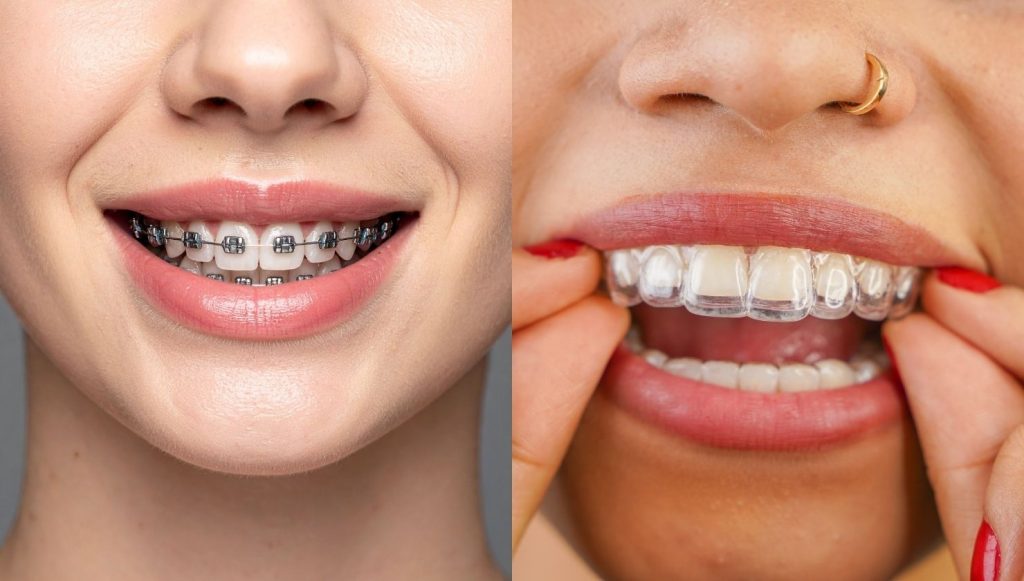
A large number of orthodontic patients ask the same question during their first consultation:
“Should I get braces or Invisalign?”
The answer is rarely simple. Two people can have teeth that appear similar at first glance but require completely different treatment approaches once the bite, jaw relationship, gum health, and tooth movement are properly assessed.
At Dr Saba Orthodontic Clinic, many patients visiting an Orthodontic clinic Abu Dhabi believe clear aligners are automatically the best option because they are less visible. Others assume braces are outdated or only meant for teenagers. Neither assumption is accurate.
Modern orthodontics is far more advanced than it was even a decade ago. Today, treatment planning involves digital scans, facial analysis, bite evaluation, and highly customized movement strategies designed around long-term oral health rather than cosmetic alignment alone.
For some patients, Invisalign offers an excellent solution with minimal disruption to daily life. For others, braces provide the precision needed to correct difficult bite problems safely and efficiently.
The right decision depends on what your teeth and jaw actually need — not what is trending online. This guide explains the differences between braces and Invisalign, how orthodontists determine suitability, what adults and teenagers should realistically expect, and why choosing the correct system matters for both appearance and function.
How Are Braces Different From Invisalign?
Both braces and Invisalign improve tooth alignment and bite positioning. The major difference is the way each system applies orthodontic force. Braces rely on brackets and archwires fixed directly onto the teeth. Invisalign uses removable transparent trays that gradually guide teeth into new positions over a series of stages.
Although both methods can straighten teeth successfully, they behave very differently in complex orthodontic cases. That distinction is important because orthodontics is not simply about moving visible teeth into a straighter line. Proper treatment must also consider:
- Jaw balance
- Bite stability
- Chewing efficiency
- Gum support
- Facial proportions
- Long-term retention
When these factors are ignored, patients may end up with alignment that looks better cosmetically but functions poorly over time.
What Situations Usually Respond Better To Braces?
Braces continue to play an important role in modern orthodontic care because they provide strong mechanical control over tooth movement.
They are frequently recommended for:
- Severe crowding
- Deep overbite correction
- Underbite treatment
- Crossbite cases
- Open bite correction
- Impacted teeth
- Difficult rotations
- Extraction-based treatment plans
- Major occlusion problems
- Complex malocclusion patterns
Because braces stay attached throughout treatment, they work continuously without depending heavily on patient consistency. This matters more than many people realize. Patients with complicated bite discrepancies often need extremely controlled movement involving roots, bone positioning, and jaw coordination. Fixed braces usually provide more predictability in these situations. At Dr Saba Orthodontic Clinic, treatment recommendations are based on biomechanics and long-term stability rather than marketing trends or cosmetic preference alone.
Why Has Invisalign Become So Popular Among Adults?
Invisalign changed the way many adults think about orthodontic treatment. Years ago, adults frequently postponed treatment because they disliked the appearance of metal brackets. Clear aligners offered an alternative that fit more comfortably into professional and social environments.
Today, Invisalign remains especially popular among:
One reason is visibility. The aligners are difficult to notice during normal conversation, meetings, or social interaction. Another reason is convenience.
Patients can remove aligners while eating, brushing, or attending important events. Unlike braces, there are usually no restrictions involving popcorn, hard foods, or sticky snacks. Oral hygiene is also easier for many patients because brushing and flossing remain relatively normal during treatment.
Digital orthodontic planning has further increased interest in aligner systems. Modern software can simulate tooth movement and help patients visualize projected changes before treatment even begins. At Dr Saba Orthodontic Clinic, digital scans are used to create individualized treatment strategies based on each patient's facial structure, bite relationship, and alignment goals for invisalign treatment cases.
Can Invisalign Handle Serious Orthodontic Problems?
This is one of the biggest misunderstandings surrounding aligners. Many people still believe Invisalign only works for small cosmetic adjustments. That is no longer true.
Current aligner systems can often manage:
- moderate crowding
- spacing problems
- certain overbite cases
- relapse after previous braces
- mild crossbite patterns
- dental arch irregularities
Attachments, elastics, staged movements, and advanced treatment planning have expanded what aligners can accomplish.
However, there are still limitations. Some patients require tooth movement that is extremely difficult to achieve consistently with removable trays alone. Others may have skeletal discrepancies or severe rotations that respond more effectively to braces.
This is why specialist evaluation matters. A patient may technically qualify for Invisalign but still achieve better functional results with braces depending on:
- Bite depth
- Root positioning
- Jaw balance
- Compliance level
- Periodontal condition
- Complexity of movement
Orthodontics should never be approached as a one-size-fits-all treatment.
Is Invisalign Faster Than Braces?
Not necessarily. Treatment duration depends more on biology and compliance than on the appliance itself.
Minor Invisalign cases sometimes finish within a year. More advanced aligner treatment may require additional refinement stages that extend treatment time considerably. Comprehensive braces treatment commonly lasts between 18 and 24 months, although severe malocclusion cases may take longer. One important issue many patients underestimate is aligner wear time.
Invisalign trays normally need to remain in place for:
When patients repeatedly remove aligners or forget to wear them consistently, tooth movement slows down and tracking problems can develop. This is one reason some orthodontists still prefer braces for younger patients or adults with demanding schedules. Braces continue working all day without relying on patient memory or discipline.
Which Treatment Feels More Comfortable?
Most orthodontic systems create temporary soreness because teeth are moving through bone and supporting tissues. Still, the day-to-day experience differs between braces and aligners.
Invisalign patients often appreciate:
- Smooth tray surfaces
- Absence of metal wires
- Reduced cheek irritation
- Easier meal routines
- Fewer emergency appointments
Braces patients often benefit from:
- Stronger movement control
- Continuous force application
- Less responsibility for compliance
- Better correction in severe cases
The first few weeks usually involve an adjustment period regardless of treatment type. Speech adaptation, pressure sensations, and mild tenderness are common early on. Most patients adapt fairly quickly once treatment becomes part of their routine.
Why Does Bite Function Matter As Much As Straight Teeth?
A smile can appear straight while the bite remains unhealthy underneath. This is where specialist orthodontic diagnosis becomes extremely important.
Improper occlusion may contribute to:
- Uneven enamel wear
- Gum strain
- Chewing imbalance
- Jaw tension
- TMJ discomfort
- Tooth fracture risk
- Difficulty cleaning crowded areas
Patients sometimes focus only on visible alignment because that is what they notice in photographs or mirrors. Orthodontists evaluate far more than appearance.
They assess:
- How the teeth meet
- Jaw positioning
- Facial symmetry
- Dental arch coordination
- Periodontal stability
- Long-term retention potential
Straightening teeth without stabilizing the bite can create future problems even if the smile initially looks improved.
What Happens After Orthodontic Treatment Ends?
One of the biggest mistakes patients make is assuming treatment finishes once the braces come off or the final aligner tray is completed.
Teeth naturally attempt to drift back toward their original positions over time. This process is known as orthodontic relapse.
Retainers help preserve the final result.
Depending on the case, retention may involve:
- Clear removable retainers
- Fixed bonded retainers
- Nighttime wear protocols
Patients who stop using retainers frequently experience:
- Returning crowding
- Reopened spacing
- Bite changes
- Gradual relapse
Retention planning is a critical part of successful orthodontics and should never be treated as an afterthought.
Why Are More Adults Seeking Orthodontic Treatment Today?
Adult orthodontics has increased significantly across global dental markets during the past several years. Many adults who avoided treatment earlier in life are now pursuing orthodontic care for reasons that go far beyond appearance.
Some are concerned about:
- Crowded teeth that are difficult to clean
- Premature enamel wear
- Jaw strain
- Bite instability
- Gum recession
- Facial balance
- Smile confidence
Others are preparing for restorative or cosmetic dental work and require bite correction beforehand.
There is also greater awareness surrounding preventive oral healthcare. Proper alignment can make brushing and flossing easier while reducing plaque accumulation in difficult areas.
Orthodontic treatment is no longer viewed as something limited to adolescence. Adults in their 30s, 40s, and even later frequently undergo successful treatment when oral health conditions are appropriate.
Are DIY Aligners A Safe Alternative?
Mail-order aligners and unsupervised online systems continue to attract attention because they appear convenient and inexpensive. However, tooth movement without proper orthodontic supervision carries serious risks.
Moving teeth incorrectly can contribute to:
- Gum recession
- Unstable bite patterns
- Root damage
- Incomplete correction
- Poor tracking
- Bone support problems
- Worsening occlusion
Orthodontics involves controlled biological movement. Teeth are connected to bone, ligaments, gums, and jaw structures that require careful evaluation before any movement begins. A proper orthodontic assessment includes far more than impressions or photographs.
At Dr Saba Orthodontic Clinic, treatment planning involves detailed clinical evaluation to ensure movement is safe, predictable, and suitable for long-term oral health.
What Should Patients Expect During An Orthodontic Consultation?
Many people postpone consultations because they assume the process will feel overwhelming or highly technical. A well-structured consultation should actually provide clarity.
During the assessment process, the orthodontist examines:
- Tooth positioning
- Bite relationships
- Jaw alignment
- Crowding severity
- Facial balance
- Gum condition
- Oral hygiene status
- Functional concerns
Digital imaging or 3D scans may also be performed depending on the case.
Patients are then guided through:
- Suitable treatment options
- Expected timelines
- Estimated complexity
- Maintenance responsibilities
- Retention planning
- Financial considerations
The purpose of the consultation is not simply to recommend braces or Invisalign. The real objective is determining which treatment can achieve stable, healthy, realistic results with the lowest long-term risk.
Frequently Asked Questions
Can Invisalign Correct Severe Crowding?
Some moderate and advanced crowding cases respond well to aligners, particularly when attachments and staged movements are used. Severe crowding may still respond more predictably to braces.
Are Braces More Affordable Than Invisalign?
Traditional braces are often less expensive initially. Invisalign treatment may involve additional digital planning and laboratory costs depending on complexity.
Can Adults Still Get Braces Later In Life?
Yes. Many orthodontic patients today are adults seeking functional improvement, healthier alignment, or cosmetic enhancement.
Do Braces Work Better Than Invisalign?
Not automatically. The better treatment depends on the difficulty of the case, bite condition, compliance level, and movement requirements.
Which Treatment Is Less Noticeable?
Invisalign aligners are significantly more discreet than traditional braces and are commonly preferred by adults concerned about visibility.
The Best Orthodontic Choice Depends On Proper Diagnosis
There is no universal answer to the braces-versus-Invisalign question because no two orthodontic cases are identical. Some patients benefit enormously from aligners because their goals, lifestyle, and dental condition match the strengths of removable systems. Others require the precision and force control that braces provide for stable bite correction.
The important decision is not choosing the trendiest treatment. It is choosing the approach that supports healthy function, reliable alignment, and long-term stability.
At Dr Saba Orthodontic Clinic, every orthodontic treatment plan is built around detailed diagnosis, individualized planning, and evidence-based care designed to support both aesthetics and oral health.